


Benefits of Linking Math to Daily Life
This page describes benefits of linking math to daily life.
Sections explain cognitive, motivational, and transfer advantages.
It also offers practical approaches for educators.
Cognitive Benefits
Linking math to everyday contexts improves comprehension.
First, it helps learners form meaningful mental representations.
Moreover, it supports memory by anchoring concepts to familiar experiences.
Consequently, students can retrieve and apply ideas more easily.
Motivational Benefits
Connecting math to daily life increases perceived relevance.
In addition, relevance often boosts engagement during learning activities.
As a result, learners may show greater persistence with challenging problems.
Furthermore, seeing practical use can strengthen learners’ confidence in skills.
Transfer Benefits
Real-world links promote transfer of skills to new situations.
Therefore, learners can adapt concepts beyond classroom examples.
Moreover, contextual learning fosters flexible problem solving strategies.
Consequently, students may recognize where math applies in various settings.
Practical Approaches for Educators
- Teachers can identify everyday scenarios that reflect core concepts.
- They can design tasks that mirror those scenarios without overcomplication.
- Educators can prompt students to explain connections in their own words.
- Teachers can vary contexts to encourage broader generalization.
Everyday Example Strategies Organized by Topic
Arithmetic
This section presents everyday strategies for practicing arithmetic.
Use familiar tasks to reinforce number skills and mental math.
Apply quick estimation and simple scaling to build numerical intuition.
Practical Analogies
Use money exchanges to practice addition and subtraction.
Scale recipe quantities to reinforce multiplication and division.
Estimate amounts to build rounding and mental calculation skills.
Everyday Contexts
Split a bill among friends to explore fair division.
Count repetitions in chores to practice repeated addition.
- Ask learners to calculate totals from a mock receipt.
- Have learners adjust a simple shopping list for more people.
Algebra
This section outlines practical ways to introduce basic algebra concepts.
Translate everyday situations into simple symbolic relationships.
Encourage hands-on testing to develop equation intuition and skills.
Geometry
This section connects geometric ideas to familiar visual experiences.
Observe shapes and spatial relations in everyday surroundings.
Practice measuring and comparing to strengthen spatial reasoning.
Probability and Statistics
This section frames chance and data collection in daily situations.
Master Calculations Instantly
Unlock solutions for math, physics, engineering, and chemistry problem with step-by-step clarity. No internet required. Just knowledge at your fingertips, anytime, anywhere.
Use simple observations to introduce variability and expectation.
Encourage recording results to reveal patterns and variation.
Functions
This section shows how input-output relationships appear in daily life.
Create simple mappings to illustrate consistent rules and results.
Use tables and examples to reveal predictable functional patterns.
Designing Classroom Lessons with Real-Life Scenarios
This section describes designing classroom lessons with real-life scenarios.
The template shows step-by-step planning for lesson design.
The guide also covers projects, group tasks, and assessment aligned to real life.
Lesson Template Step-by-Step Planning
Begin by stating a clear learning objective tied to a real-life scenario.
Next choose a familiar context that connects to the objective and students’ experiences.
Then list the materials and simple prompts that will guide student inquiry.
Afterwards design a short launch activity that motivates and frames the problem.
Then create guided practice tasks that model reasoning and show solution methods.
Next plan independent practice that asks students to apply skills in a new situation.
Finally add reflection prompts that encourage students to articulate their thinking.
Structuring Group Tasks for Collaboration
Form groups with attention to varied strengths and collaborative potential.
Then assign clear roles so each student has concrete responsibilities.
Also include short checkpoints to keep groups focused and on schedule.
Furthermore design prompts that require students to explain methods and decisions aloud.
Finally schedule brief peer feedback cycles to build revision and accountability.
Types of Group Tasks
This section lists common group task types used in classrooms.
Each task connects mathematics to everyday contexts for deeper learning.
Teachers can select tasks that match specific learning goals.
- Problem-solving challenges that situate math in everyday contexts.
- Data collection activities that use simple observations or class surveys.
- Design tasks that involve measurement and iterative improvement cycles.
- Presentation tasks that require clear explanation and justification of results.
Project-Based Activities That Extend Learning
Design projects that span several lessons and emphasize applied reasoning.
Then break projects into manageable milestones and review opportunities.
Also offer choices so students pursue questions that interest them personally.
Moreover prepare templates for documentation to support consistent student work.
Finally set transparent expectations and success criteria before project work begins.
Project Workflow Template
This template outlines phases for project based learning.
Each phase supports student planning, research, and revision.
Master Calculations Instantly
Unlock solutions for math, physics, engineering, and chemistry problem with step-by-step clarity. No internet required. Just knowledge at your fingertips, anytime, anywhere.
Teachers should review milestones and provide timely feedback.
- Launch phase introduces the real-life problem and clarifies student goals.
- Research phase guides data gathering and connections to mathematical ideas.
- Draft phase asks students to create models or computations and record methods.
- Revise phase incorporates feedback and strengthens reasoning or solutions.
- Presentation phase shares findings and explains decisions to an audience.
- Reflection phase prompts students to evaluate their learning and next steps.
Assessment Ideas Aligned to Real-Life Tasks
Use formative checks during activities to monitor understanding and adjust instruction.
Then design performance tasks that require students to apply reasoning in context.
Also create rubrics that describe observable behaviors and clear criteria for success.
Furthermore include self-assessments so students reflect on strategies and growth.
Moreover use brief exit tickets to capture immediate learning and common misconceptions.
Finally compile portfolios to document progression across tasks and projects.
Assessment Formats to Consider
This section suggests several assessment formats for classroom use.
Formats focus on observable participation, reasoning, and student reflection.
Teachers can use rubrics and peer review to streamline feedback.
- Observation checklists completed during group work to note participation and reasoning.
- Short performance prompts that require written methods and verbal justification.
- Peer review forms focused on clarity of reasoning and collaborative contributions.
- Student reflections that link mathematical choices to the chosen real life scenario.
- Rubrics shared in advance to guide student work and streamline feedback.
Find Out More: How Mathematics Shapes Everyday Problem-Solving
Adapting Examples for Different Grades and Abilities
This page explains how to adapt examples by grade and ability.
It presents principles, supports, and planning tips for classroom use.
Teachers can apply these approaches to meet varied learner needs.
Core Principles for Scaling Complexity
Start with a clear learning target to guide adaptation decisions.
Provide multiple entry points to accommodate varied readiness levels.
Increase abstraction gradually while maintaining contextual anchors.
Monitor cognitive load and simplify steps when students need support.
Design extensions for learners who need greater challenge.
Adapting for Primary Learners
Use tangible objects and concrete experiences to ground ideas.
Keep language simple and write short sentences for clarity.
Use familiar contexts to boost engagement and comprehension.
Provide frequent checkpoints to confirm understanding and progress.
Include visual supports and predictable routines for classroom stability.
Adapting for Early Secondary Learners
Bridge concrete examples to simple abstract representations gradually.
Introduce multiple representations to build flexible mathematical understanding.
Use collaborative tasks to distribute cognitive demand and promote reasoning.
Scaffold symbolic notation alongside contextual explanations and models.
Vary task complexity to support mixed ability groups effectively.
Adapting for Upper Secondary Learners
Shift emphasis toward formal notation and generalized procedures.
Master Calculations Instantly
Unlock solutions for math, physics, engineering, and chemistry problem with step-by-step clarity. No internet required. Just knowledge at your fingertips, anytime, anywhere.
Present richer contexts that require multi step reasoning and planning.
Provide opportunities for independent problem framing and analysis.
Encourage metacognitive reflection on strategy choices and outcomes.
Offer project like tasks that allow deeper exploration and synthesis.
Language and Instructional Supports
Simplify instructional language without diluting the core concept.
Use sentence frames to scaffold explanations and student reasoning.
Preview key vocabulary and connect terms to concrete examples.
Supply visual glossaries and anchor charts for quick reference.
Paraphrase complex prompts to support diverse learners in comprehension.
Scaffolds and Accessibility Supports
Provide worked examples that students can study and mimic.
Offer step prompts that break tasks into manageable actions.
Use manipulatives and visual models to reveal hidden structure.
- Provide worked examples that students can study and mimic.
- Offer step prompts that break tasks into manageable actions.
- Use manipulatives or visual models to reveal hidden structure.
- Include hint banks that students can access independently.
- Adapt timing and output formats to reduce unnecessary barriers.
Formative Assessment and Differentiated Feedback
Use quick checks to identify when adjustments are necessary.
Pose tiered questions that vary in cognitive demand for students.
Provide feedback that specifies next steps for improvement.
Document patterns of error to inform future scaffolds and teaching.
Adjust supports dynamically based on evidence of student learning.
Planning and Reflective Checklist
Identify the essential skill or concept for each lesson.
Choose contexts that match students’ experiences and interests.
Plan low, mid, and high entry points for every task.
- Identify the essential skill or concept for the lesson.
- Choose contexts that match students’ experiences and interests.
- Plan low, mid, and high entry points for tasks.
- Select linguistic and visual supports necessary for access.
- Prepare extension tasks for students who finish early.
- Schedule moments to review and adjust based on outcomes.
Uncover the Details: Understanding the Power of Calculus in Advanced Science
Engagement Techniques for Everyday Examples
Furthermore, stories provide context that connects ideas to daily routines.
Additionally, visuals make abstract relationships visible and easier to compare.
Furthermore, combining methods addresses diverse learning preferences simultaneously.
Storytelling to Frame Problems
Additionally, narratives create emotional hooks that sustain attention and curiosity.
- Next, craft brief scenarios that focus on one clear mathematical challenge.
- Moreover, pause during the story to invite predictions and calculations.
- Also, use relatable characters and simple conflicts to motivate problem solving.
Using Visuals to Clarify Concepts
Moreover, diagrams and sketches reduce cognitive load during problem solving.
- First, choose a single clear visual to represent the main idea.
- Next, highlight key parts of the visual to guide student attention.
- Also, invite students to create quick sketches to express their reasoning.
Manipulatives to Make Abstract Ideas Tangible
Furthermore, hands-on objects allow learners to test ideas through movement.
Additionally, physical interaction supports concrete understanding of symbolic notation.
- Next, select a small set of manipulatives aligned with the target concept.
- Also, model clear moves before students handle materials independently.
- Moreover, encourage students to explain how the manipulative maps to symbols.
Role-Play and Simulations to Embody Concepts
Additionally, role-play invites students to act out relationships and decision processes.
Furthermore, simulations provide safe space to explore consequences and trade-offs.
Master Calculations Instantly
Unlock solutions for math, physics, engineering, and chemistry problem with step-by-step clarity. No internet required. Just knowledge at your fingertips, anytime, anywhere.
- Next, assign clear roles that reveal specific mathematical perspectives.
- Also, keep scenarios short to maintain focus and energy.
- Moreover, debrief to link actions back to formal mathematics language.
Combining Techniques for Deeper Engagement
Additionally, layered techniques create richer opportunities for sense making.
- Next, pair a short story with a supporting diagram to guide reasoning.
- Also, follow a manipulatives activity with a brief role-play to extend understanding.
- Moreover, alternate silent sketching with group discussion to balance reflection and dialogue.
Classroom Management and Flow
Additionally, communicate clear goals before any interactive task begins.
Furthermore, define simple signals for transitions to minimize downtime.
- Next, prepare materials in labeled stations to streamline distribution.
- Also, allocate short timed rounds to preserve momentum and focus.
Assessing Understanding During Engagement
Additionally, listen for student language that links actions to mathematical terms.
Moreover, watch for strategies students use when encountering unexpected results.
- Also, ask students to describe one step they found useful.
- Furthermore, invite learners to state a single question they still have.
Gain More Insights: How Matrices Are Used in Computer Graphics
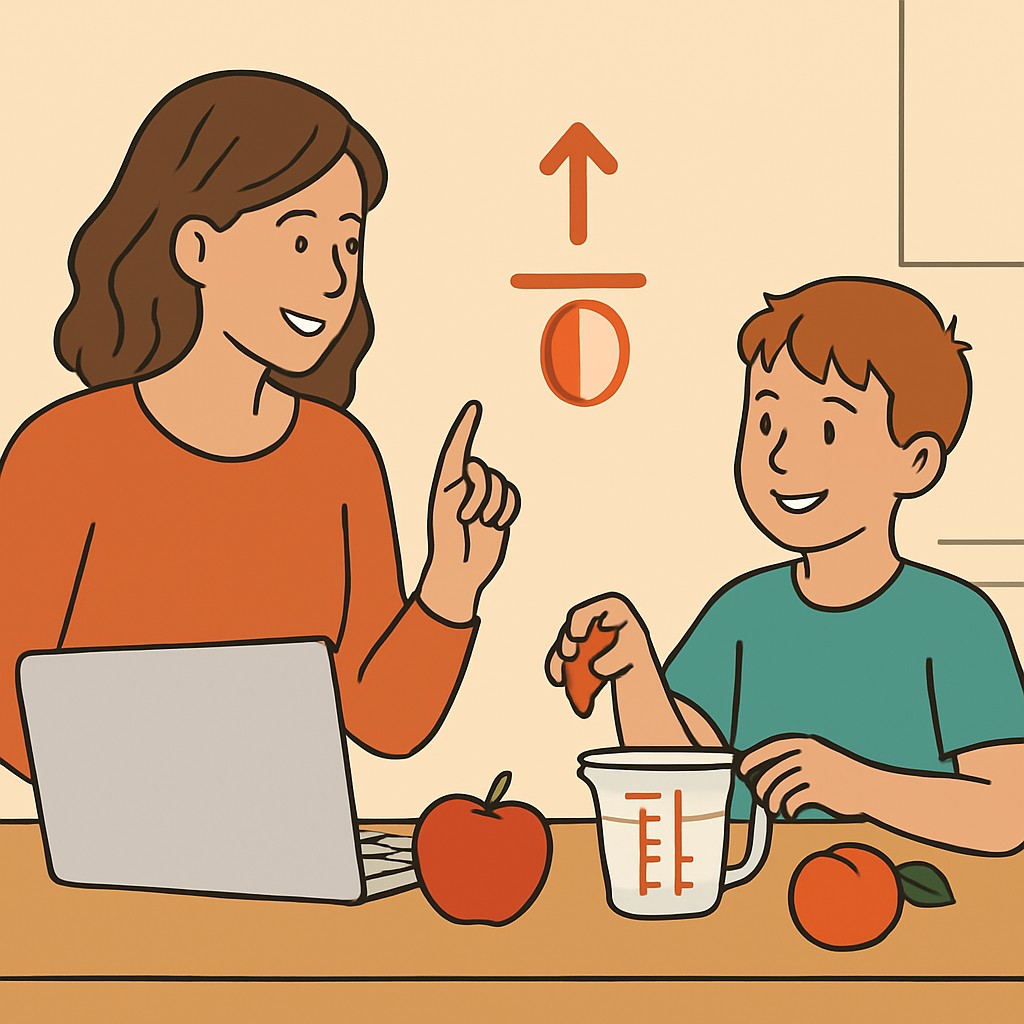
Leveraging Technology and Real-World Data
Use technology to connect math goals to real data.
Identify the mathematical objective before selecting tools and platforms.
Prepare datasets and simulations to support student exploration.
Matching Tools to Learning Goals
Identify the mathematical objective before selecting technology.
Next, pick apps or platforms that support that objective clearly.
Also, prefer tools with simple interfaces for quick student onboarding.
- Ease of use for students and teachers matters for classroom flow.
- Data import and export capabilities support flexible classroom workflows.
- Visualization options help students see patterns and test ideas.
- Collaboration features allow group work and peer data sharing in class.
Preparing and Curating Live Data
Select live datasets that relate directly to the learning target.
Then, preview the data to check format, completeness and clarity.
Also, anonymize or generalize sensitive information for student use.
Finally, schedule dataset updates and note their frequency for classroom planning.
Designing Interactive Simulations
Define adjustable parameters that reveal mathematical relationships when changed.
Then, create tasks that require prediction, adjustment, and interpretation.
Use guided prompts to focus exploration and reduce random clicks.
Using Spreadsheets for Exploration and Modeling
Introduce spreadsheets as tools for calculation and visualization.
Also, model problems with formula cells and linked charts for insight.
Encourage students to test assumptions by changing inputs and observing outputs.
Integrating Apps and In-Class Interaction
Use apps to collect class responses and to visualize aggregated results instantly.
Then, discuss the live results to connect patterns to mathematical ideas.
Additionally, allow small groups to curate data collected by peers for deeper work.
Assessment and Feedback with Technology
Design quick checks that run within apps or spreadsheets for immediate insight.
Moreover, use student interaction logs to tailor feedback and next steps.
Also, provide clear success criteria linked to the digital tasks students complete.
Accessibility, Equity, and Classroom Logistics
Check device availability and plan alternatives for students without reliable access.
Also, offer offline options or printed materials when necessary.
Master Calculations Instantly
Unlock solutions for math, physics, engineering, and chemistry problem with step-by-step clarity. No internet required. Just knowledge at your fingertips, anytime, anywhere.
Ensure interfaces meet accessibility needs such as readable text and keyboard navigation.
Finally, schedule time for students to learn tool basics before complex tasks.
Troubleshooting and Classroom Management Tips
Test all files and links before bringing them to class.
Also, prepare a low-tech fallback activity for unexpected technical issues.
Additionally, set clear time limits and checkpoints during digital exploration.
Building Data Literacy Through Reflection
Prompt students to explain how data choices affect conclusions drawn.
Then, ask learners to critique data quality and suggest improvements.
Finally, use reflections to strengthen critical reasoning about real data.
You Might Also Like: The Connection Between Trigonometry and Architecture
Ensuring Cultural Relevance and Addressing Misconceptions
Teachers select contexts that reflect diverse student experiences.
Additionally, they avoid examples that assume shared cultural knowledge.
Furthermore, contexts should allow multiple entry points for learners.
Choosing Inclusive Contexts
Offer multiple contexts so students select relevant options.
Address beliefs that math ability is fixed.
Instead, emphasize effort, strategies, and feedback.
Principles for Choosing Contexts
- Pick situations from varied daily routines.
- Steer clear of assumptions about roles or interests.
- Provide key vocabulary and visual cues.
Dispelling Everyday Math Myths
However, avoid implying that struggles indicate weakness.
Use short classroom demonstrations to reveal common errors.
Review examples for cultural or socioeconomic assumptions.
Common Misconceptions to Tackle
- Math is only for certain people.
- Correct answers are more important than thinking.
- Real life never uses abstract reasoning.
Creating Bias-Aware Examples
Additionally, avoid framing that reinforces stereotypes.
Instead, design prompts that validate multiple backgrounds.
Invite student input when selecting contexts.
Checklist for Bias Awareness
- Check who benefits from the context.
- Check which skills the example highlights.
- Adjust names, settings, and tasks to increase inclusivity.
Classroom Practices to Implement
Next, pilot examples with small groups.
Also, collect quick feedback to refine materials.
Finally, reflect on your own assumptions regularly.
Measuring Impact and Iterating
This section builds on earlier lesson design guidance.
It focuses on assessment, feedback, and refining examples.
The following parts outline methods and a practical iteration cycle.
Formative Assessment Strategies
Use quick checks to gauge student understanding during lessons.
Vary question formats to reveal different student thinking patterns.
Collect examples of student work for brief, targeted analysis.
Master Calculations Instantly
Unlock solutions for math, physics, engineering, and chemistry problem with step-by-step clarity. No internet required. Just knowledge at your fingertips, anytime, anywhere.
Observe problem solving fluency and strategy selection in real time.
- Use exit prompts that ask students to summarize their main learning.
- Offer short quizzes that target the lesson’s core skill.
- Encourage pair discussions to surface reasoning and misconceptions.
- Collect work samples that show students applying ideas to familiar contexts.
Gathering Student Feedback
Ask learners for specific feedback about examples and task relevance.
Use anonymous formats to promote honest and candid responses.
Combine written responses with brief oral check-ins for richer data.
- What part of the example helped you understand the idea?
- Which part remained confusing or unclear for you?
- How might this example connect to your daily routines?
- What would improve the example for future learners?
Reflection Prompts for Learners
Provide prompts that encourage metacognition and transfer of skills.
For example, ask students to explain how they would use the idea elsewhere.
Invite learners to identify specific steps that helped them solve problems.
Request descriptions of errors and explanations of how students corrected them.
- I noticed that I used this strategy because…
- This connection felt useful when I…
- Next time I will try a different approach by…
Analyzing Outcomes and Refining Examples
Review assessment data to identify common misunderstandings and strengths.
Then map findings to learning objectives and example contexts.
Consequently adjust example complexity or scaffolding to target identified gaps.
Pilot revised examples with a small group to observe changes.
- Simplify context details to reduce unnecessary cognitive load.
- Change the real-life scenario to increase student relevance.
- Introduce intermediate steps to strengthen procedural fluency.
- Offer multiple contexts to test generalization of understanding.
Practical Iteration Cycle
Plan a small change based on one clear observation.
Implement the change in a single lesson and collect focused feedback.
Analyze results and decide whether to adopt, adapt, or discard the change.
Document the rationale and plan the next refinement cycle.
Additional Resources
Google search results for Making Mathematics More Relatable Through Everyday Examples Mathematics
Bing search results for Making Mathematics More Relatable Through Everyday Examples Mathematics


