


Design-thinking Modules for Engineering Courses
These modules teach design thinking through hands-on experiences.
They connect imagination with technical problem solving in class.
Additionally, they provide a clear module structure for instructors.
Structured Ideation
This module guides students through organized brainstorming sessions.
Moreover, it balances free thinking with focused constraints.
Encourage diverse idea generation.
Overview
Use timed idea sprints driven by concise prompts.
Then group ideas into clusters through affinity mapping.
Next, refine selected ideas using focused peer feedback rounds.
Goals
Teach methods to expand concept variety.
Improve selection criteria for promising concepts.
Also, evaluate students on how they justify selections.
- Encourage diverse idea generation.
- Teach methods to expand concept variety.
- Improve selection criteria for promising concepts.
Activities
Encourage quantity before judging idea quality.
Also, rotate facilitation roles among student teams.
Moreover, provide simple constraints to spark creativity.
- Use timed idea sprints driven by concise prompts.
- Then group ideas into clusters through affinity mapping.
- Next, refine selected ideas using focused peer feedback rounds.
Facilitation Tips
- Encourage quantity before judging idea quality.
- Also, rotate facilitation roles among student teams.
- Moreover, provide simple constraints to spark creativity.
Assessment
Assess idea variety and documentation quality.
Align assessment rubrics with module learning goals for clarity.
- Assess idea variety and documentation quality.
- Also, evaluate students on how they justify selections.
Empathy Mapping
This module centers user perspectives in engineering design work.
Additionally, it cultivates attentive listening and observational skills.
Develop student ability to articulate user needs clearly.
Module Purpose
Also, teach synthesis of observations into actionable insights.
Finally, promote ethical empathy in technical problem solving.
Conduct interviews and observation sessions with simulated stakeholders.
Learning Objectives
Then build empathy maps that capture thoughts and feelings.
Also, translate maps into defined user needs and design criteria.
Model active listening and open questioning techniques in class.
- Develop student ability to articulate user needs clearly.
- Also, teach synthesis of observations into actionable insights.
- Finally, promote ethical empathy in technical problem solving.
Class Exercises
- Conduct interviews and observation sessions with simulated stakeholders.
- Then build empathy maps that capture thoughts and feelings.
- Also, translate maps into defined user needs and design criteria.
Instructional Tips
Also, encourage students to separate assumptions from observations.
Moreover, create a safe environment for sharing subjective perspectives.
- Model active listening and open questioning techniques in class.
- Also, encourage students to separate assumptions from observations.
- Moreover, create a safe environment for sharing subjective perspectives.
Evaluation Strategies
Evaluate clarity of empathy maps and insight translations.
Also, assess how well teams apply user needs to design choices.
Master Calculations Instantly
Unlock solutions for math, physics, engineering, and chemistry problem with step-by-step clarity. No internet required. Just knowledge at your fingertips, anytime, anywhere.
Encourage students to document process artifacts and decisions in a portfolio.
- Evaluate clarity of empathy maps and insight translations.
- Also, assess how well teams apply user needs to design choices.
Creative Prototyping Exercises
This module emphasizes rapid prototyping with low fidelity materials.
Moreover, it encourages playful exploration of form and function.
Enable translation of concepts into tangible mockups.
Purpose and Scope
Also, highlight iterative improvement through tangible feedback loops.
Encourage risk taking and material experimentation safely.
Build quick mockups using everyday materials and simple tools.
Key Outcomes
- Enable translation of concepts into tangible mockups.
- Also, highlight iterative improvement through tangible feedback loops.
- Encourage risk taking and material experimentation safely.
Exercises
Then run usability tests and capture user reactions succinctly.
Also, iterate prototypes based on observed user responses and constraints.
- Build quick mockups using everyday materials and simple tools.
- Then run usability tests and capture user reactions succinctly.
- Also, iterate prototypes based on observed user responses and constraints.
Safety and Materials
Recommend safe materials and basic handling guidelines for students.
Moreover, ensure that instructors review hazards with each activity.
Assess functionality, communicative clarity, and iteration evidence.
Review Criteria
Also, include student reflection on design decisions and learning growth.
Then require short reflections that connect methods to design outcomes.
- Assess functionality, communicative clarity, and iteration evidence.
- Also, include student reflection on design decisions and learning growth.
Assessment and Integration
Design activities to connect ideation, empathy, and prototyping sequentially.
Also, build assignments that require cross-module synthesis and reflection.
Integrating Modules
Portfolio and Reflection
Also, collect brief student feedback to refine module activities iteratively.
Instructor Tips
Moreover, collect brief student feedback to refine module activities iteratively.
Project-Based Approaches and Open-Ended Challenges
Project-based approaches emphasize open-ended challenges and student-driven solutions.
These approaches highlight process skills and iterative development.
They encourage flexible paths and multiple valid outcomes.
Designing Open-Ended Projects
Open-ended projects center on a clear problem with flexible solution paths.
Begin by setting learning goals that emphasize process and transferable skills.
Then create constraints that encourage creativity without prescribing solutions.
Also define deliverables that allow multiple valid outcomes.
Include checkpoints that prompt reflection and course correction.
Scaffolding and Instructor Support
Teachers act as coaches who pose questions and remove obstacles.
Offer targeted mini-lessons that address common technique gaps.
Schedule regular feedback sessions to surface emerging design choices.
Provide resource lists that students can adapt to their needs.
Master Calculations Instantly
Unlock solutions for math, physics, engineering, and chemistry problem with step-by-step clarity. No internet required. Just knowledge at your fingertips, anytime, anywhere.
Assessment That Rewards Divergence and Iteration
Assessment should value originality, evidence of iteration, and thoughtful testing.
Use rubrics that balance final performance and process documentation.
- Clarity of problem framing and rationale for chosen approach.
- Depth of iterative cycles and responsiveness to feedback.
- Quality of prototypes and empirical testing evidence presented.
- Reflection on failures, trade-offs, and learning steps taken.
Classroom Practices for Rapid Iteration
Time-box short cycles for building, testing, and revising solutions.
Require quick prototypes that demonstrate core assumptions.
Run peer review rounds focused on specific improvement goals.
Encourage rapid swaps of ideas across teams to spark diversity.
Documentation and Reflection
Ask students to maintain process journals that record decisions and tests.
Prompt concise reflections after each iteration cycle.
Collect artifacts that show progression across versions.
Schedule sharing sessions where teams explain their evolution.
Logistics and Learning Environment
Create flexible work areas that support making and collaborative discussion.
Plan materials and procedures that enable quick adjustments.
Set clear safety guidelines and risk management practices.
Organize time and space to minimize friction during iteration.
Storytelling and Visual Thinking for Engineering Problem Solving
This section introduces storytelling and visual thinking techniques for engineering problem solving.
These techniques help teams make technical problems more relatable.
Teams can use narratives and visuals to clarify motivations and expected impacts.
Narrative Framing
Storytelling helps reframe technical problems into relatable narratives.
Consequently, teams perceive constraints and goals in human terms.
Furthermore, narratives clarify motivations and expected impacts.
Additionally, simple plots highlight cause and effect relationships.
Character-Driven Scenarios
Create generic characters to represent stakeholders and system users.
Next, describe each character’s goals and key frustrations.
Then, link technical requirements to character needs and actions.
Finally, use characters to evaluate solutions from different perspectives.
Problem as Journey
Map the problem as a journey from start to desired outcome.
Moreover, identify obstacles and turning points along the route.
Afterward, imagine alternate routes that bypass major obstacles.
Consequently, teams explore nonobvious steps toward solutions.
Analogies and Metaphor Use
Analogies transfer understanding from familiar domains to technical problems.
Master Calculations Instantly
Unlock solutions for math, physics, engineering, and chemistry problem with step-by-step clarity. No internet required. Just knowledge at your fingertips, anytime, anywhere.
Therefore, pick source domains that simplify the system’s core functions.
Additionally, choose metaphors that preserve essential relationships and constraints.
However, avoid analogies that oversimplify critical technical details.
Cross-Domain Mapping
Start by listing system elements and their basic roles.
Next, find analogous roles in a different domain or activity.
Then, map interactions and limitations across the two domains.
Finally, use the mapping to propose alternative mechanisms or architectures.
Selecting Effective Analogies
Prefer analogies that highlight structure rather than superficial features.
Consequently, teams focus on transferable patterns and constraints.
Furthermore, test analogies by checking where they break down.
Then, refine or discard analogies based on those limits.
Visual-Thinking Techniques
Visual thinking externalizes abstract relationships as visible artifacts.
Therefore, sketching clarifies assumptions and reveals hidden connections.
Additionally, visual tools accelerate shared understanding among collaborators.
Sketching to Explore Structure
Encourage quick, low-detail sketches to explore system layouts.
Next, annotate sketches with short labels for forces and flows.
Then, iterate sketches to compare alternative configurations visually.
Consequently, teams identify structural trade-offs more rapidly.
Storyboards and Timelines
Use storyboards to show how systems behave over time.
Next, arrange frames to display interactions and sequence changes.
Then, spot temporal bottlenecks and transitions visually.
Finally, use timelines to evaluate system responses under different scenarios.
Concept Maps and Spatial Models
Build concept maps to reveal relationships among ideas and components.
Additionally, use spatial layouts to suggest modular or layered designs.
Furthermore, color or shape cues can indicate priorities and risks.
Consequently, concept maps guide focused exploration of complex systems.
Practical Classroom Activities and Prompts
Provide short prompts that invite narrative reframing of a technical challenge.
For example, ask students to describe the problem from a fictional user’s view.
Next, assign small groups to generate three distinct analogies for the problem.
Then, ask each group to sketch one visual model that captures system dynamics.
Master Calculations Instantly
Unlock solutions for math, physics, engineering, and chemistry problem with step-by-step clarity. No internet required. Just knowledge at your fingertips, anytime, anywhere.
Additionally, rotate artifacts among groups for rapid critique and refinement.
Group Collaboration Practices
Encourage role rotation so participants try different narrative perspectives.
Moreover, use timed rounds to keep activities focused and energetic.
Finally, capture artifacts on shared surfaces for later review and comparison.
Assessment and Reflection Prompts
Ask learners to state which narrative or analogy most influenced their thinking.
Next, request a short note explaining how a visual artifact changed assumptions.
Then, prompt learners to identify where analogies failed and why.
Consequently, reflection strengthens transfer of imaginative techniques to future problems.
Explore Further: How to Introduce Engineering Math Through Real Structures
Cross-Disciplinary Collaborations for Broader Perspectives
Cross-disciplinary collaborations broaden perspectives in engineering education.
They expose assumptions that limit common technical solutions.
Such collaborations require intentional structures and aligned assessment.
Why Bridge Disciplines
Bridging disciplines expands the range of questions engineers ask.
It also reveals assumptions that narrow typical solutions.
Different disciplines add distinct evaluative criteria to problems.
Arts Partnerships
Arts collaborations introduce aesthetic and material experimentation methods.
They also foreground sensory and embodied ways of knowing.
Students consequently learn to value form alongside technical function.
- Co-taught studio sessions encourage hands-on exploration.
- Joint exhibitions surface public responses to prototypes.
- Artist-led critiques help refine expressive and communicative dimensions.
Entrepreneurship Connections
Entrepreneurship emphasizes feasible and sustainable solutions.
It trains learners to consider resource and market constraints.
Students therefore develop practical pathways for implementation and scaling.
- Pitch practice clarifies value propositions and audience needs.
- Mentor sessions highlight trade-offs between novelty and viability.
- Market immersion prompts adjustments based on stakeholder feedback.
Humanities Integration
Humanities provide critical frameworks for context and meaning-making.
They also surface ethical implications and cultural perspectives.
As a result, students weigh social consequences alongside technical metrics.
- Seminar dialogues cultivate interpretive and argumentative skills.
- Textual analysis sharpens attention to language and framing.
- Historical inquiry situates problems within long-term patterns.
Structures for Sustainable Collaboration
Intentional structures help collaborations endure beyond single courses.
Shared goals and assessment promote aligned teaching practices.
Flexible scheduling supports faculty from different departments.
- Shared rubrics clarify outcomes across disciplinary perspectives.
- Coordinated calendars prevent conflicts during intensive activities.
- Institutional recognition incentivizes cross-disciplinary teaching efforts.
Assessing Learning and Reflection
Assessment should capture both process and product equally.
Reflective practices help students articulate learning across disciplines.
Portfolios can document evolving perspectives and decisions.
Master Calculations Instantly
Unlock solutions for math, physics, engineering, and chemistry problem with step-by-step clarity. No internet required. Just knowledge at your fingertips, anytime, anywhere.
Peer feedback encourages comparative evaluation between disciplinary norms.
Discover More: Creative Ways to Teach Accuracy in Engineering Calculations
Classroom Culture and Instructor Practices
Create shared norms with students to shape the learning environment.
These norms should encourage respectful risk taking and mutual support.
Establish expectations that mistakes reveal assumptions and inspire discovery.
Establish Psychological Safety
Co-create learning norms with students at the course start.
Prioritize respectful risk taking and clear mutual support structures.
Agree on behaviors that prevent ridicule and protect learners.
Normalize uncertainty as part of authentic engineering problem solving.
Frame Failure as Productive Experimentation
Describe failures as informative experiments rather than final endpoints.
Invite students to document what each attempt taught them.
Require short debriefs after activities to capture emerging insights.
Consequently, students translate setbacks into concrete next steps.
Constructive Critique Practices
Teach critique as an evidence-based conversation about design choices.
Use prompts that separate idea evaluation from personal judgment.
Guide students to cite observations and likely impacts on outcomes.
Model requests for clarification before offering corrective suggestions.
Peer Review Structures
Organize brief structured peer reviews with assigned roles.
Clarify each role to keep feedback focused and safe.
Rotate roles so students practice diverse feedback behaviors over time.
- Assign one student to summarize the idea and one to ask questions.
- Assign one student to identify strengths and another to suggest risks.
- Rotate roles so everyone practices different feedback behaviors.
Feedback Rhythms and Low-Stakes Assessment
Provide frequent low-stakes checkpoints that reward exploration.
Use short progress notes instead of single high-stakes tests.
Emphasize criteria that value insight and iterative improvement.
Offer optional revisions based on formative comments and guidance.
Instructor Modeling and Language
Demonstrate curiosity by verbalizing your questioning processes aloud.
Show step by step approaches to ambiguous problems to model thinking.
Use language that favors hypothesis testing over fixed correctness.
Acknowledge your uncertainties to normalize learning edges for students.
Scaffolding Risk-Taking
Begin with short experiments that keep perceived stakes low.
Gradually increase complexity as students build their confidence and skills.
Master Calculations Instantly
Unlock solutions for math, physics, engineering, and chemistry problem with step-by-step clarity. No internet required. Just knowledge at your fingertips, anytime, anywhere.
Provide templates to reduce friction when students try novel ideas.
Consequently, students face manageable challenges that stretch their abilities.
Time and Space for Exploration
Create dedicated schedule windows for unstructured tinkering sessions.
Allow short pauses during class for divergent thinking activities.
Set aside physical or virtual areas for prototypes and artifacts.
Thus, curiosity gains a visible and valued place in the environment.
Reflection and Iteration Routines
Embed short reflection prompts into every assignment cycle.
Ask learners what surprised them and what they will try next.
Capture iterative plans that connect past tests to future actions.
Consequently, students develop habits for continuous improvement.
Practical Instructor Moves
Invite students to present incomplete work to gather early feedback.
Provide neutral critique language such as observations and clarifying questions.
Model rapid prototyping by sharing rough sketches and thought experiments.
- Invite presentations of incomplete work for formative review.
- Offer neutral phrasing for critiques using observations and questions.
- Share rough sketches or quick prototypes to model iteration.
- Celebrate discoveries and learning moves, not only final solutions.
Maintaining Momentum
Regularly revisit and revise classroom norms with student input.
Solicit feedback on critique practices and adjust them as needed.
Acknowledge small cultural shifts to reinforce sustained changes.
You Might Also Like: Why Electrical Engineering Relies Heavily on Math
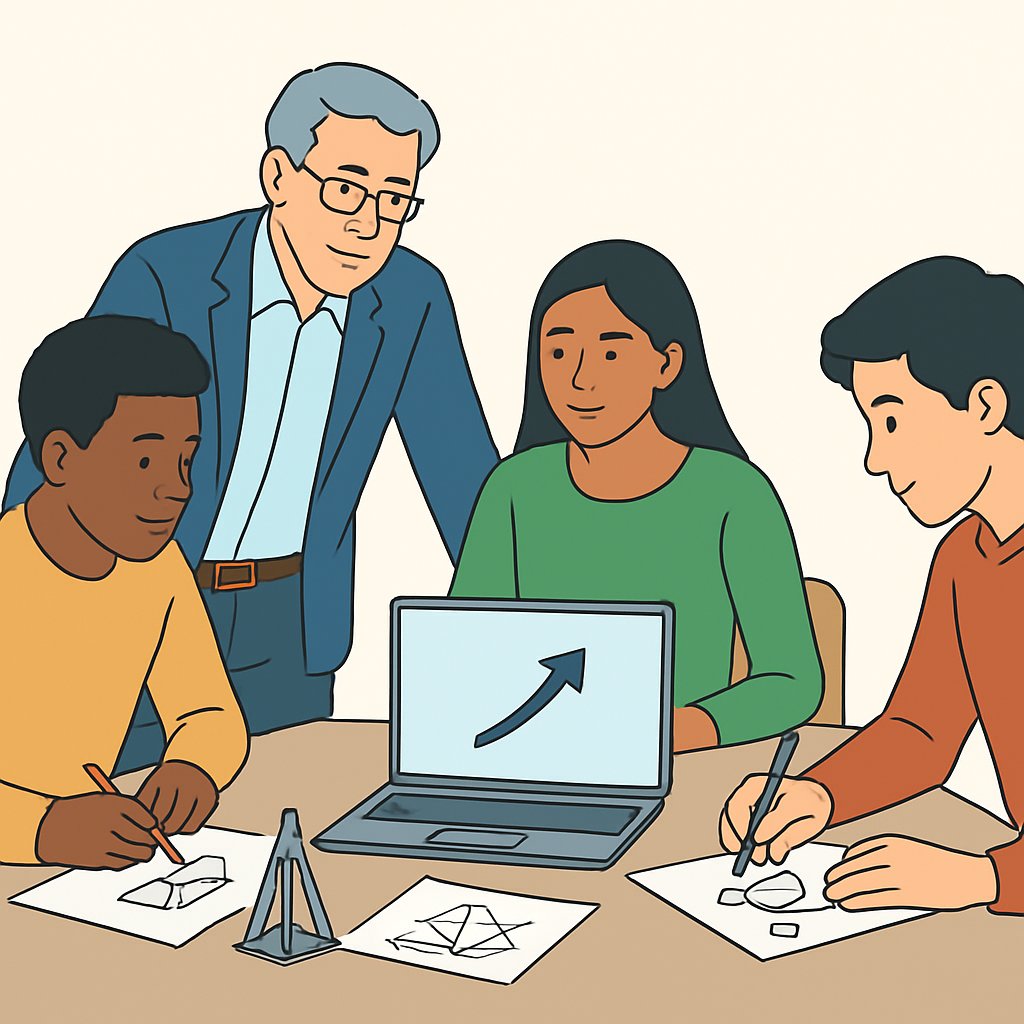
Hands-On Tools and Activities
These activities engage learners through tangible challenges and playful structures.
Additionally, they cultivate flexible thinking and practical problem-solving skills.
They connect imagination with technical problem solving.
Gamified Tasks
Gamified tasks turn engineering challenges into playful missions.
Consequently, students engage more and explore multiple approaches.
They support flexible thinking and iterative experimentation.
Structure
- Define clear objectives that align with learning goals.
- Set simple rules that encourage experimentation and fairness.
- Include rapid feedback to guide iteration and improvement.
- Design varied roles to promote collaboration and different perspectives.
Implementation Tips
- Start with a short briefing to explain goals and mechanics.
- Vary challenge constraints to refresh engagement across sessions.
- Rotate roles so students practice diverse responsibilities and thinking.
- Debrief after play to connect choices with engineering reasoning.
Lateral-Thinking Puzzles
These puzzles prompt unconventional reasoning and reframing of problems.
Meanwhile, they reduce fixation on familiar solution paths.
Students practice hypothesis testing and varied explanations.
Design Guidelines
- Create ambiguous scenarios that require hypothesis testing and questioning.
- Encourage students to generate multiple plausible explanations per puzzle.
- Use hints sparingly to keep challenge and momentum balanced.
Classroom Practices
Also, record observations to support later discussion.
- Facilitate group brainstorming to surface diverse assumptions and ideas.
- Conduct short reflection rounds to record surprising insights and dead ends.
Sketch Labs
Sketch labs use rapid drawing to externalize and test ideas visually.
Furthermore, they speed communication and early critique among peers.
Timed sketches help teams iterate ideas quickly.
Master Calculations Instantly
Unlock solutions for math, physics, engineering, and chemistry problem with step-by-step clarity. No internet required. Just knowledge at your fingertips, anytime, anywhere.
Session Flow
- Begin with a clear prompt that focuses on a single design aspect.
- Allow short timed sketch rounds to promote quick iteration and variety.
- Share sketches in pairs for immediate feedback and alternative perspectives.
- Guide a brief synthesis to extract common patterns and promising ideas.
Materials and Setup
- Provide paper, pens, and simple templates for focused sketching.
- Arrange seating to support face-to-face sharing and quick swaps.
- Use timers to keep rounds brisk and ideas flowing.
Constrained Creativity Prompts
Constrained prompts limit resources or rules to spark inventive solutions.
Therefore, students learn to leverage trade-offs and prioritization skills.
These tasks highlight creative problem solving under limits.
Prompt Types
- Resource limits challenge consumption and force inventive substitutions.
- Functional constraints define mandatory features and promote elegant designs.
- Contextual roles assign stakeholder perspectives to guide trade-off decisions.
- Temporal limits create urgency and highlight rapid decision making.
Facilitation Strategies
- Introduce constraints gradually to scaffold growing creative confidence.
- Celebrate unconventional but feasible ideas to reinforce risk taking.
- Encourage iterative revisions that respond directly to the constraints presented.
Assessment and Reflection
Use formative assessments to observe problem-solving approaches and choices.
Additionally, employ short reflective prompts to capture reasoning and learning moments.
Encourage action plans that apply activity insights to future tasks.
Gain More Insights: How Calculations Are Powering the Renewable Energy Revolution
Assessment Strategies That Evaluate Creative Process
Assessments should value the creative process as much as final correctness.
Consequently, instructors can design tasks that reveal thinking and iteration.
Furthermore, assessment can guide learning rather than only judge outcomes.
Reflection-Based Assessments
Use guided reflection prompts to surface decision rationales and tradeoffs.
Additionally, require short reflective entries at key milestones.
Prompt students to describe failed experiments and what they learned.
Also ask learners to link reflections to next steps and design choices.
Portfolio-Based Assessments
Ask students to curate a portfolio showing work progression and alternatives.
Include sketches, notes, prototypes, and reflection excerpts as process artifacts.
Moreover, emphasize the narrative of development rather than only final artifacts.
- Collect iterative sketches and annotated revisions that show idea evolution.
- Include prototype photos, test notes, and short reflection snippets.
- Encourage a short overview that ties artifacts to learning goals.
Rubric Design for the Creative Process
Create rubrics that measure stages of ideation, testing, and refinement.
Use descriptive anchors to clarify expectations for originality and reasoning.
Moreover, include self and peer rating scales to triangulate assessment.
Also allow space in rubrics for narrative evaluator comments about growth.
Formative Checkpoints and Process Documentation
Set regular checkpoints to capture iteration and decision points.
Require brief logs that note goals, experiments, and next steps.
Consequently, instructors can monitor trajectories and provide timely guidance.
Feedback and Peer Review Practices
Give timely, specific feedback focused on process improvement.
Also encourage peer critique with clear protocols for constructive comments.
Finally, teach students to use feedback to plan subsequent iterations.
Encourage students to document how they acted on feedback over time.
Practical Implementation Tips
Align assessments with learning goals about creativity and problem solving.
Balance formative and summative assessments to support evidence of growth.
Master Calculations Instantly
Unlock solutions for math, physics, engineering, and chemistry problem with step-by-step clarity. No internet required. Just knowledge at your fingertips, anytime, anywhere.
Train graders on rubric use and calibration discussions.
Additionally, start small and iterate assessment designs with student input.
Process-focused assessment fosters imaginative engineering work.
Sustaining Imaginative Practice
This section outlines methods to sustain imaginative practice over time.
Therefore, it focuses on mentorship, industry briefs, online resources, and scalable models.
It guides maintenance of creative habits and program continuity.
Mentorship
Mentors help sustain creative habits over time.
They model reflective practice and give targeted encouragement.
Mentors help learners translate imaginative approaches into repeatable routines.
Purpose and Roles
Mentors support practical skill growth through sustained guidance.
They provide targeted encouragement during creative challenges.
They model reflective practice to illustrate iterative learning.
Mentor Structures
Adopt flexible pairings to match mentor availability and learner needs.
Create short micro mentoring sessions for timely feedback.
Implement peer mentorship layers to broaden support networks.
- Regular check ins keep momentum for ongoing projects.
- Goal setting meetings align expectations and next steps.
- Reflection conversations capture lessons and spark new ideas.
Mentor Development
Provide clear role descriptions and simple onboarding materials.
Offer brief training focused on coaching imaginative methods.
Schedule feedback loops to strengthen mentoring practices.
Industry Briefs
Industry briefs introduce authentic constraints and real world contexts.
They stimulate imaginative problem framing and practical solutioning.
Briefs should remain adaptable to diverse classroom scales.
Design and Purpose
Briefs introduce authentic constraints to ground creative work.
They encourage problem framing that sparks practical solutions.
They should remain adaptable for diverse classroom scales.
Delivery and Cadence
Rotate concise briefs to maintain engagement and novelty.
Allow time for teams to iterate on initial proposals.
Include reflection prompts that connect briefs to learning goals.
- Short scenario statements focus attention and spark ideas.
- Open ended deliverables encourage multiple solution paths.
- Debrief sessions reinforce learning and practical takeaways.
Sustaining Partnerships
Establish simple channels for ongoing industry input and updates.
Create templates for brief submission and feedback to save time.
Nurture relationships through regular communication and shared goals.
Master Calculations Instantly
Unlock solutions for math, physics, engineering, and chemistry problem with step-by-step clarity. No internet required. Just knowledge at your fingertips, anytime, anywhere.
Online Resources
Create a central repository for reusable prompts and artifacts.
Host short asynchronous modules that reinforce imaginative techniques.
Maintain discussion forums for ongoing peer exchange.
Resource Types
Curated prompt libraries provide instant inspiration for instructors.
Micro lessons deliver focused guidance in small time blocks.
Community spaces enable sharing of experiments and reflections.
- Curated prompt libraries provide instant inspiration for instructors.
- Micro lessons deliver focused guidance in small time blocks.
- Community spaces enable sharing of experiments and reflections.
Access and Maintenance
Keep resources lightweight and easily discoverable for busy educators.
Tag materials by skill focus and instructional context.
Solicit periodic contributions from practitioners to refresh content.
Scalable Program Models
Design modular curriculum units that scale across class sizes.
Define clear facilitator guides to support varied instructors.
Include starter kits to lower barriers for new adopters.
Core Components
Modular units allow selective adoption based on local needs.
Facilitator guides embed routines that sustain imaginative practice.
Starter kits provide quick setups for pilot implementations.
- Modular units allow selective adoption based on local needs.
- Facilitator guides embed routines that sustain imaginative practice.
- Starter kits provide quick setups for pilot implementations.
Operational Strategies
Leverage blended delivery to combine synchronous coaching with asynchronous materials.
Use role templates to distribute responsibilities across staff.
Implement lightweight evaluation to inform continuous improvements.
Sustainability and Growth
Encourage alumni networks to maintain institutional memory and momentum.
Reward contributions that keep programs active and accessible.
Plan periodic reviews to adapt models as contexts evolve.
Measuring and Reinforcing Continuity
Track simple indicators that reflect regular engagement and practice frequency.
Collect short reflections to capture learning trajectories and adaptations.
Use insights to iterate program elements and resource priorities.
Practical Indicators
Monitor indicators that show regular engagement and practice frequency.
Apply insights to iterate program elements and resource priorities.
Reinforcement Mechanisms
Embed short repeatable rituals that normalize imaginative exploration.
Create recognition systems that celebrate experimentation and risk taking.
Integrate mentor and industry feedback to validate ongoing efforts.
Additional Resources
Google search results for Teaching Engineering Problem Solving With More Imagination Engineering
Master Calculations Instantly
Unlock solutions for math, physics, engineering, and chemistry problem with step-by-step clarity. No internet required. Just knowledge at your fingertips, anytime, anywhere.
Bing search results for Teaching Engineering Problem Solving With More Imagination Engineering


