


Anchor Equations in Everyday Phenomena
Teachers can make equations meaningful with real observations.
They anchor symbols to things students can see and measure.
Then they link classroom language to everyday causes and effects.
Overview
Begin with phenomena students encounter regularly.
Also ensure activities stay safe and classroom friendly.
Prefer situations where quantities change clearly and visibly.
Choosing Everyday Phenomena
Choose events that learners can easily observe.
For example, motion, temperature change, and light variations.
Also select phenomena that allow simple measurements.
Observability and Clarity
Focus on events with clear observable features.
Students should notice changes without complex instruments.
This clarity helps them connect equations to real phenomena.
Measurability
Pick phenomena that allow simple measurements.
Then ensure students can record values reliably and repeatedly.
Use common tools that students can handle easily.
Controllability
Prefer situations where one variable changes at a time.
Controlling factors lets students relate changes to equation terms.
Thus they can identify cause and effect in data.
Designing Simple Measurements
Define the quantity that each equation term represents.
Next, decide how students will measure that quantity.
Then plan short trials that fit class time limits.
- Identify the independent and dependent variables first.
- Choose accessible measurement tools available in class.
- Control other factors to isolate the target relationship.
- Repeat measurements to show variability and reliability.
Mapping Equation Terms to Observations
Translate each algebraic symbol into a tangible quantity.
For instance, express speed as distance traveled over time.
Also show how constants represent fixed aspects of situations.
Classroom Activities to Anchor Equations
Use brief demonstrations followed by hands-on measurement tasks.
Then ask students to predict outcomes using the equation.
Next have them compare predictions with actual observations.
Finally guide students to adjust models based on their data.
Assessing Understanding and Reflection
Ask students to explain how each term appears in the phenomenon.
Also request short reports that link measurements to the equation.
Master Calculations Instantly
Unlock solutions for math, physics, engineering, and chemistry problem with step-by-step clarity. No internet required. Just knowledge at your fingertips, anytime, anywhere.
Then use quick discussions to surface misconceptions and correct them.
Use manipulatives, physical models and simple experiments to embody variables, constants and operations
Hands-on tools make abstract symbols directly tangible for young learners.
Physical interaction helps students form mental connections with variables.
Tactile models clarify which elements act as constants or changing quantities.
Benefits of Hands-On Representation
Students can see operations performed rather than only imagining them.
This approach complements earlier real-world examples.
Choose one concept to isolate, such as a single variable or a basic operation.
Types of Manipulatives and Physical Models
Assemble a minimal set of manipulatives that represent each element of the concept.
Ask learners to predict outcomes before any manipulation.
Change only one factor to show the effect of that variable.
- Simple counters and colored blocks represent quantities and variable changes clearly.
- Balance-like models illustrate equality, addition, subtraction, and comparative operations.
- Sliders and rulers embody continuous change and measurement in controlled ways.
- Elastic or spring-like materials demonstrate proportional relationships and restoring forces.
- Pictorial tokens stand in for variables to support symbolic translation later.
Designing Simple Experiments
Next, assemble a minimal set of manipulatives that represent each element of the concept.
Finally, prompt students to describe observed changes using simple symbolic notation.
Classroom Implementation Tips
Keep experiments brief and focused to maintain attention.
Rotate roles so more students handle materials and explain observations.
Provide guiding questions that link actions to symbolic operations.
- Keep experiments brief and focused to maintain attention.
- Rotate roles so more students handle materials and explain observations.
- Provide guiding questions that link actions to symbolic operations.
- Ensure materials are safe, durable, and easy to reset between trials.
- Scaffold complexity by moving from concrete models to reduced representations.
Assessment and Reflection Prompts
Ask learners to show which object represented the variable in the activity.
Ask how changing one item affected the outcome and why.
Encourage students to redraw the setup using simple symbols or equations.
- Ask learners to show which object represented the variable in the activity.
- Ask how changing one item affected the outcome, and why.
- Encourage students to redraw the setup using simple symbols or equations.
- Invite learners to propose a new experiment that tests a related operation.
- Use student explanations to assess understanding of variables, constants, and operations.
Teaching Multiple Representations
This guide explains methods for teaching multiple representations.
It emphasizes translating and connecting ideas across different formats.
Teachers should build students’ ability to move between formats using reasoning.
Learning Goals
Using different representations helps learners connect ideas across formats.
Moreover, practice translating improves flexible problem solving skills.
Help students interpret graphs, diagrams, spoken explanations, and algebraic expressions.
Also build the ability to move between formats with reasoning and language.
Types of Representations
This section describes common representation types teachers can use.
It highlights how each format communicates relationships and processes.
Teachers should note affordances and limitations for each representation.
Graphs
Use graphs to show quantitative relationships and trends visually.
Also highlight axes, scales, and key points during instruction.
Master Calculations Instantly
Unlock solutions for math, physics, engineering, and chemistry problem with step-by-step clarity. No internet required. Just knowledge at your fingertips, anytime, anywhere.
Point out slopes and intercepts when they matter for reasoning.
Diagrams
Use diagrams to map parts, forces, or processes clearly.
Additionally, label components and show connections between variables.
Encourage students to read diagrams and describe links.
Spoken Explanations
Encourage students to describe relationships and reasoning aloud.
Then guide precise language for quantities, change, and causality.
Provide sentence frames to support clear spoken explanations.
Algebraic Forms
Present algebraic expressions as compact descriptions of relationships.
Moreover, show how symbols represent quantities and operations clearly.
Translate between symbols and diagrams during instruction.
Strategies for Translating Between Representations
Start by identifying what each representation communicates.
Use guiding questions to connect features across different formats.
Model translation step by step while thinking aloud for students.
- Start with identifying what each representation communicates.
- Use guiding questions to connect features across formats.
- Model translation step-by-step while thinking aloud.
- Ask students to produce two different representations for one problem.
- Provide sentence frames to support spoken explanations.
Translation Examples
Translate a graph to an algebraic form by describing slope and relationship.
Convert an algebraic expression into a diagram by representing variables visually.
Turn a spoken explanation into a graph by identifying key quantities and changes.
- Translate a graph to an algebraic form by describing slope and relationship.
- Convert an algebraic expression into a diagram by representing variables visually.
- Turn a spoken explanation into a graph by identifying key quantities and changes.
Practice Activities
Design short tasks where students convert one representation into another.
Also use pair work to have peers explain and critique translations.
Moreover, include quick formative checks for interpretation accuracy and clarity.
Assessment and Feedback
Offer targeted feedback on both content and representational choices.
Also assess students on clarity and fidelity when translating between formats.
Provide rubrics that focus on accuracy and communication.
Teacher Moves
Model translation during instruction and highlight decision points explicitly.
Then encourage reflection on why one representation suits a problem better.
Encourage students to justify representational choices in discussion.
Find Out More: How Physics Calculations Explain Natural Phenomena
Scaffold Prerequisite Math Skills and Scientific Vocabulary
Scaffold learning from concrete numbers toward abstract symbols.
First, build fluent number sense before introducing symbolic notation.
Additionally, pair mathematical steps with precise scientific vocabulary.
Purpose and approach
This section complements hands-on and representation strategies.
Master Calculations Instantly
Unlock solutions for math, physics, engineering, and chemistry problem with step-by-step clarity. No internet required. Just knowledge at your fingertips, anytime, anywhere.
Begin with verbal counting and quantity matching activities.
Next, practice comparing amounts using comparative language.
Progressive learning stages
Furthermore, encourage students to explain quantity relationships in words.
Introduce addition and subtraction concepts with story language first.
Then, present operation words before showing operation symbols.
Number Sense and Counting
Moreover, use sentence frames that connect words to symbolic expressions.
Teach consistent measurement language alongside practical measuring tasks.
Consequently, introduce units as labels that clarify numerical values.
Operations and Early Algebraic Thinking
Therefore, reinforce unit vocabulary whenever students record measurements.
Describe fractional ideas using whole-part language initially.
Later, map that language onto fractional notation and percent words.
Measurement and Units
Additionally, highlight ratio language as a comparative description tool.
Present variables as placeholders for unknown or changing numbers.
Then, show simple symbolic equations after students master word descriptions.
Fractions, Ratios, and Proportional Thinking
Finally, connect each symbol to a clear verbal explanation each time.
Introduce key scientific terms before or alongside related symbols.
Use concise definitions.
Transition to Variables and Symbols
Repeat definitions in different contexts.
Provide sentence frames.
Embed vocabulary and symbolic forms in those frames.
Strategies for teaching vocabulary
Moreover, ask students to produce short oral explanations using target words.
Additionally, label classroom displays with vocabulary and matching symbols.
Use short prompts that ask students to describe quantities in words.
Classroom prompts and checks
Next, follow prompts that require translating words into simple symbols.
Then, ask students to justify symbol choices using vocabulary words.
Furthermore, perform quick formative checks to confirm understanding.
Pacing and assessment guidance
Progress in small steps and revisit earlier stages frequently.
Moreover, use brief checks that focus separately on math and vocabulary.
Finally, adjust pacing based on student explanations and symbolic accuracy.
Learn More: Physics on the Go: Essential Calculations for Real-World Applications
Master Calculations Instantly
Unlock solutions for math, physics, engineering, and chemistry problem with step-by-step clarity. No internet required. Just knowledge at your fingertips, anytime, anywhere.
Giving Symbols Intuitive Meaning Through Stories and Analogies
Giving symbols intuitive meaning helps learners.
Stories and analogies create context for abstract notation.
This approach encourages learners to form causal and emotional links.
How Stories Help Symbols Make Sense
Stories anchor abstract symbols in human experience.
Moreover, stories create emotional and causal links to symbols.
Consequently, learners remember symbol meanings more readily.
Designing Relatable Analogies
Choose analogies that match learners’ familiar activities.
Then keep analogies simple and focused on one idea.
Also highlight how each analogy maps a symbol’s role.
- Personify symbols as characters with motivations.
- Map symbols to everyday roles or functions.
- Use comparisons of relative sizes or rates.
Building Concept-Based Narratives
Start narratives with a clear problem or question.
Next introduce symbols as characters or as tools within the narrative.
Then show how symbols interact and produce measurable outcomes.
Finally connect the story resolution back to the equation structure.
Classroom Practices and Prompts
Invite students to describe what each symbol would do in a scene.
Then ask learners to retell the story using different words.
Also encourage students to create short narratives for new symbols.
- Explain why a symbol changes during the story.
- Recast a symbol as a helper, opponent, or resource.
- Predict outcomes when a symbol’s value alters.
Assessing Understanding Through Narratives
Request students to translate a narrative back into symbolic form.
Additionally ask learners to compare two different analogies for the same symbol.
Use reflections to identify persistent misunderstandings about symbol roles.
Explore Further: How Physics Calculations Solve Everyday Engineering Problems
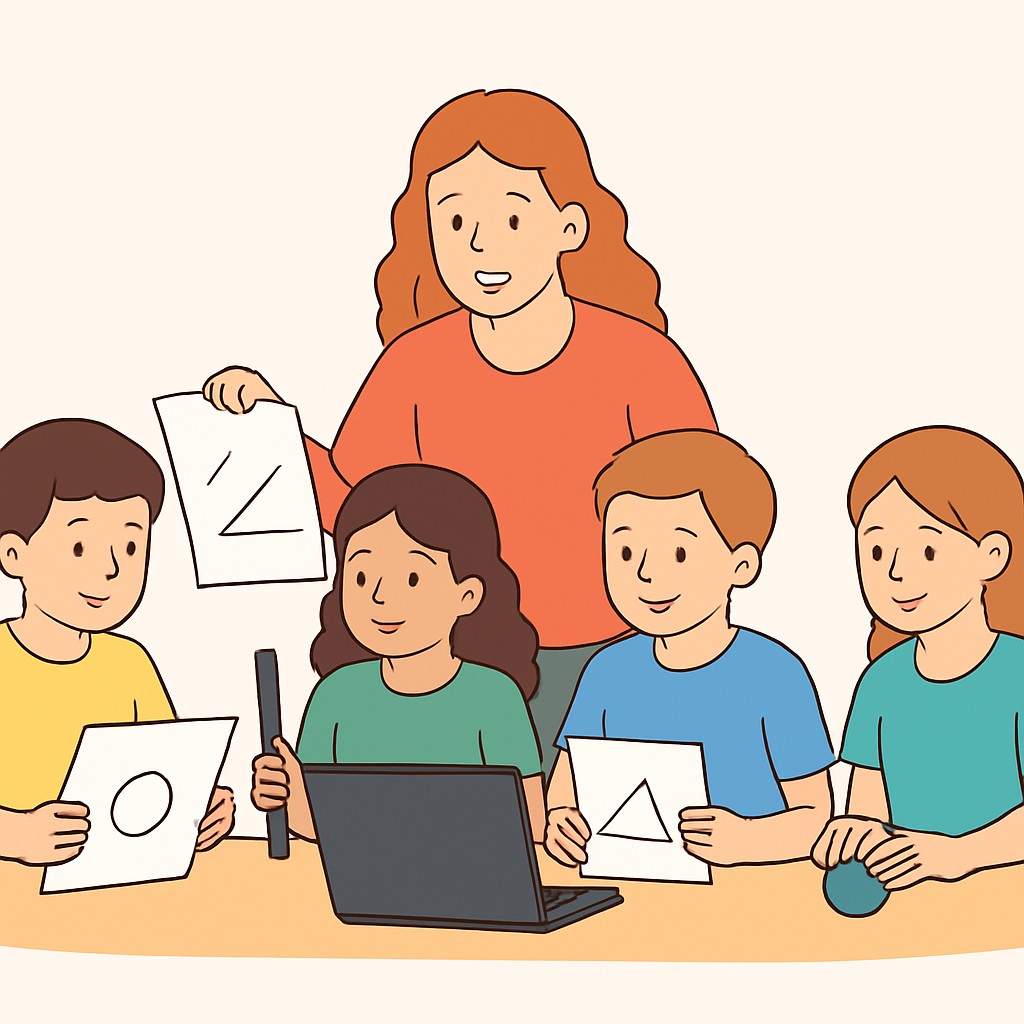
Design Inquiry-Based Labs and Guided-Discovery Tasks
Define clear conceptual goals that learners should reach by deriving an equation.
Next, frame investigable questions that point toward quantitative relationships.
Additionally, identify which variables learners can measure and which remain controlled.
Learning Goals and Question Framing
Then, specify evidence learners must produce to support derived expressions.
Start by identifying proportional or functional patterns in collected data.
Then, translate patterns into symbols and simple mathematical expressions.
Task Structure and Phases
Begin with an open investigation that prompts pattern recognition.
Meanwhile, encourage students to make qualitative observations before measuring.
Then, ask learners to propose mathematical relationships based on observations.
Exploration Phase
Encourage learners to notice repeating patterns before they record numbers.
Master Calculations Instantly
Unlock solutions for math, physics, engineering, and chemistry problem with step-by-step clarity. No internet required. Just knowledge at your fingertips, anytime, anywhere.
Hypothesis and Modeling Phase
Next, prompt students to articulate assumptions underlying proposed relationships.
Ask learners to state simplifying conditions that support their models.
Data Collection and Testing Phase
Require systematic data collection that targets the identified variables.
Then, have learners test predictions and compare values to expectations.
Have students record disagreements between measured and expected values.
Refinement Phase
Next, guide students to adjust relationships when data contradict initial ideas.
Finally, encourage concise reformulation of equations with justified parameters.
Ask learners to explain why parameter changes improve agreement with evidence.
Teacher Prompt Examples
Use targeted questions to surface student thinking during each phase.
Provide prompts that ask students to link data patterns to symbols.
Include questions that probe the effects of underlying assumptions.
- What patterns do you notice in the data?
- How would you express that relationship using symbols?
- Which assumptions did you make and how might they affect results?
Modeling and Equation Derivation
Additionally, prompt learners to check units and intuitive limits.
Testing and Refinement Strategies
Encourage error analysis that distinguishes random and systematic deviations.
Then, have students propose modifications to reduce discrepancies.
Moreover, support iterative cycles until the equation fits evidence well.
Practical Classroom Considerations
Plan time for multiple short cycles of testing and revision.
Group learners to balance diverse skills and promote shared reasoning.
Also, require clear documentation of methods, data, and changes.
Finally, reflect on safety and material constraints when designing tasks.
See Related Content: Why Physics Math Drives Space Exploration
Integrate Interactive Simulations, Animations and Low-Cost Sensors
Interactive simulations let students manipulate variables and see immediate changes.
Furthermore, animations show continuous change that static images cannot convey.
Moreover, low-cost sensors capture real-world signals for direct comparison with equations.
Designing Simulation-Based Tasks
Begin tasks with a clear question that students can test with a simulation.
Next, ask learners to predict outcomes before they run the model.
Then, prompt students to change one variable at a time and record results.
Also, encourage multiple trials to reveal consistent patterns.
- Provide clear controls and visible numeric readouts for student manipulation
- Link simulation inputs explicitly to the terms in relevant equations
- Allow pausing and stepping through events for careful inspection
- Include prompts that require students to justify observed behavior
Using Animations to Reveal Functional Relationships
Animate variable changes while showing the corresponding algebraic terms.
For example, move a point and display the matching expression beside it.
Meanwhile, synchronize motion with numeric readouts to reinforce equation links.
Master Calculations Instantly
Unlock solutions for math, physics, engineering, and chemistry problem with step-by-step clarity. No internet required. Just knowledge at your fingertips, anytime, anywhere.
Furthermore, allow users to slow motion to inspect transient behavior.
Implementing Low-Cost Sensor Activities
Select sensors that measure accessible classroom phenomena.
Then, design short data-collection protocols for quick experiments.
Next, show students how to calibrate sensors with simple references.
Also, show students how data streams relate to specific equation variables.
Furthermore, discuss sources of measurement error and how to reduce them.
- Keep wiring simple and ensure safe setups for all activities
- Use short trials to maintain engagement and generate immediate feedback
- Record starting conditions to make comparisons meaningful across trials
- Rotate practical roles so many students handle the instruments directly
Classroom Workflow and Student Roles
Organize sessions into predict, test, and reflect phases.
Next, assign practical roles such as operator and recorder for efficiency.
Then, encourage peer discussion to compare raw observations and model expectations.
Also, allocate time for model refinement based on collected evidence.
Assessment through Interactive Evidence
Assess students on their ability to connect collected data with corresponding equations.
Furthermore, evaluate how students refine models after hands-on digital experiments.
Also, use student explanations and concise data summaries as formative evidence.
Using Formative Assessment and Metacognition
This section explains formative assessment and metacognition practices.
Teachers gather quick evidence about student reasoning and procedures.
Students learn to monitor symbolic problem solving and revise steps.
Quick Checks and Low-Stakes Probes
Teachers use short probes to gauge emerging equation understanding.
They gather evidence without creating high stakes for learners.
Short tasks reveal which symbolic steps students find difficult.
Then teachers adjust instruction based on probe results.
Structured Reflective Prompts
Students answer prompts that encourage thinking about problem solving choices.
Reflection helps students link procedures to underlying ideas.
Prompts invite learners to articulate reasoning and strategy shifts.
- Describe which step you found most useful and why.
- Explain a decision you made during symbolic manipulation.
- State what you would try differently on a next attempt.
Designing Error-Analysis Activities
Teachers present imperfect solutions for students to examine and critique.
Students practice identifying misconception patterns in algebraic work.
Error analysis shifts focus from answer correctness to process clarity.
Formats for Error-Analysis Tasks
Students annotate a flawed solution and justify each identified issue.
Alternatively learners rewrite a solution and explain each correction.
Small groups compare different incorrect approaches and prioritize fixes.
Feedback and Revision Cycles
Teachers provide timely specific feedback that targets reasoning and steps.
Master Calculations Instantly
Unlock solutions for math, physics, engineering, and chemistry problem with step-by-step clarity. No internet required. Just knowledge at your fingertips, anytime, anywhere.
Students revise work based on feedback and reflect on changes.
Iterative cycles reinforce awareness of common symbolic mistakes.
- Use rubrics that emphasize explanation and procedural sense.
- Encourage peer review sessions focused on descriptive actionable comments.
- Promote self-checklists that prompt metacognitive monitoring during problem solving.
Classroom Practices to Build Metacognitive Awareness
Schedule regular moments for brief written reflections after practice tasks.
Model think alouds that reveal how to monitor equation progress.
Make reflection a routine part of solving symbolic problems.
Students develop habits of checking assumptions and verifying steps.
Additional Resources
Google search results for Making Physics Equations More Meaningful for Young Learners Physics
Bing search results for Making Physics Equations More Meaningful for Young Learners Physics


