


Framing Geological Numbers Through Storytelling and Wonder
Initially, invite learners to see rocks as evolving characters in a long story.
Then pair each life stage with a numerical idea like relative change or duration.
Moreover, describe transformations as episodes that express change and scale.
Narratives of Rock Life Cycles
Start by labeling generic stages like formation, alteration, and renewal in the narrative.
Then assign comparative terms such as short, long, slow, or rapid to those stages.
Consequently, students will relate numerical language to emotional and visual images.
Deep-Time Metaphors to Give Emotional Context
Use metaphors that stretch human time to evoke deep-time feelings.
Meanwhile, compare geological pacing to familiar rhythms without specifying durations.
Therefore, learners sense scale without fixating on exact figures.
Choose images like slow rhythms or layered stories that feel tangible and poetic.
Additionally, connect those metaphors to numerical ideas such as rates and accumulation.
Practical Classroom Prompts and Activities
Create prompts that ask students to narrate numbers as parts of a rock’s life.
For example, have students describe proportions as character traits or seasonal shifts.
- Ask learners to sketch a rock life timeline and label stages with relative terms.
- Invite group storytelling that translates measurements into emotional milestones.
- Encourage comparisons that use metaphorical anchors rather than precise values.
Moreover, prompt reflection on how metaphor changes students’ relationship with data.
Assessment and Reflection
Design assessments that value interpretive descriptions as well as quantitative reasoning.
Therefore, students demonstrate understanding through stories and numerical explanations.
Finally, collect reflections about how wonder influenced their engagement with numbers.
Turn Abstract Figures into Images
Visual metaphors convert abstract figures into memorable images.
For example, relate scale to familiar objects to aid comprehension.
Furthermore, maintain consistent visual scales across comparisons.
Also, use clear labels and simple legends to avoid confusion.
This approach complements narrative framing from earlier sections.
Designing Effective Scale Diagrams
Begin with a clear reference that anchors viewer perception of size.
Next, show proportional shapes so viewers see relative magnitudes.
Additionally, include scale bars or comparative silhouettes for context.
Then, place labels near key features to reduce eye travel.
Finally, simplify details to emphasize the main numerical relationships.
Creating Layered Infographics
Layered infographics reveal multiple variables without overwhelming viewers.
Use transparency and stacking to show how elements relate spatially.
Moreover, align layers so viewers can trace proportions across sections.
Master Calculations Instantly
Unlock solutions for math, physics, engineering, and chemistry problem with step-by-step clarity. No internet required. Just knowledge at your fingertips, anytime, anywhere.
- Use a foreground layer to highlight the primary magnitude.
- Use a middle layer to show proportions among related parts.
- Use a background layer to provide contextual scale or environment.
- Include concise annotations to guide interpretation of each layer.
Using Dynamic Visualizations to Show Rates
Motion helps viewers perceive rates and temporal change intuitively.
For instance, animate a gradual shift to reveal slow processes.
Next, provide controls so learners can pause and compare moments.
Moreover, looped short animations emphasize repeating patterns or cycles.
Additionally, use visual cues like arrows or fading to indicate directionality.
Making Proportions Immediately Graspable
Represent proportions with area, length, or stacked segments for clarity.
Compare proportional visuals side by side to reveal subtle differences.
Also, use color and contrast sparingly to mark important proportions.
Then, label fractional parts directly to link numbers and visuals.
Classroom Activities to Translate Figures into Images
Ask learners to sketch a scale diagram from a given numerical description.
Next, have groups build a layered infographic on a single topic.
Then, invite students to storyboard a short animation illustrating a rate.
Furthermore, encourage peer critique focused on legibility and proportion.
Finally, reflect on which visual approach clarified the numbers most.
Designing Hands-On Investigations and Scaled Models
This section outlines investigations and model design.
It focuses on measurement and classroom scaling.
It includes examples, data methods, and safety tips.
Principles of Active Investigation
First, center learning on measurement and manipulation of tangible materials.
Next, help students discover numerical relationships through direct action.
Additionally, emphasize patterns, proportions, and rates as observable outcomes.
Earlier sections introduced storytelling and visual strategies.
Planning Investigations
Plan investigations around a measurable question.
Select clear variables and simple controls.
Set up materials and stations for efficient comparison.
Define a measurable question
Phrase the investigation as a clear measurable question.
Ensure the question invites comparison.
Also ensure the question allows quantification.
Select variables and controls
Identify independent variables students can change.
Identify dependent variables students can measure.
Include simple controls to keep experiments fair.
Master Calculations Instantly
Unlock solutions for math, physics, engineering, and chemistry problem with step-by-step clarity. No internet required. Just knowledge at your fingertips, anytime, anywhere.
Choose materials and set up stations
Pick durable materials students can handle.
Ensure materials are safe to measure and manipulate.
Organize stations so students rotate and compare results.
Plan measurement and recording methods
Provide clear templates for recording lengths, volumes, masses, and counts.
Model how to repeat measurements to estimate variability.
Also teach consistent units and repeated measures.
Designing Scaled Models
Map real features into manageable classroom scales.
Use proportions to relate models to natural features.
Include layered and dynamic process representations.
Map real features to manageable classroom scales
Choose a scale that reduces large distances to classroom size.
Also choose scales that reduce long durations.
Explain how proportions relate the model to the natural feature.
Create layered and process models
Build layered models that represent beds, layers, or deposits.
Include dynamic models that simulate movement over time.
Use layers to show sequence and relative positions.
Use scaling to teach ratios and dimensional thinking
Ask students to convert measurements between model scale and real size.
Prompt students to justify their scaling choices with proportional reasoning.
Also emphasize ratios and dimensional thinking in conversions.
Classroom Investigations Examples
Use hands-on tasks to measure and compare processes.
Examples include sediment layering, abrasion, and slope models.
Each example asks students to record measurements and analyze patterns.
- First, design a sediment layering task where students measure layer thicknesses.
- Next, create an abrasion experiment where students quantify particle size change.
- Also, offer a slope model where students measure rates of movement under varying conditions.
Data Collection and Analysis
Guide systematic measurement with consistent units and repetition.
Teach data organization using simple tables.
Then prompt comparison and visualization of results.
Guide systematic measurement
First, teach consistent units.
Next, require repeated measures for reliability.
Also, show students how to organize raw data in tables.
Encourage comparison and graphical representation
Prompt students to compare means, ranges, and ratios across trials.
Additionally, have students plot trends to reveal relationships.
Use graphs to make patterns visible and interpretable.
Master Calculations Instantly
Unlock solutions for math, physics, engineering, and chemistry problem with step-by-step clarity. No internet required. Just knowledge at your fingertips, anytime, anywhere.
Assess quantitative reasoning
Ask students to explain numerical relationships in their own words.
Next, give short prompts requiring interpretation of data and scale.
Also evaluate clarity of quantitative explanations.
Foster reflective practice
Include questions asking why measurements varied between trials.
Invite students to propose improvements to investigations.
Also ask learners to consider method changes and limitations.
Differentiation and Accessibility
Provide tactile and verbal supports for varied learners.
Offer simplified recording templates for students needing scaffolding.
Additionally, extend tasks with open-ended quantitative challenges for advanced learners.
Safety and Practical Tips
Choose nonhazardous materials and plan for easy cleanup.
Demonstrate safe handling and measurement techniques before work.
Schedule time for setup, measurement, and synthesis within lessons.
Discover More: Why Accurate Measurements Are Key to Environmental Geology
Build Game-Based Challenges to Teach Geological Calculations
This collection presents game-based challenges for geological calculations.
Also, games make calculations relevant and motivate learners through active play.
Teachers will see clear goals and observable outcomes for each activity.
Purpose and Learning Objectives
Use games to make calculations meaningful and motivating.
Aim for practice, reasoning, and data interpretation skills.
Align activities with specific calculation goals and observable outcomes.
Types of Activities
Vary formats to address different learning preferences and goals.
Combine puzzles, quests, timed labs, and hybrid rounds to engage learners.
Each format emphasizes particular calculation skills and thinking processes.
- Puzzle sequences require solving numeric problems to reveal the next clue.
- Quests send learners on staged tasks that demand measurement and arithmetic.
- Timed labs challenge speed and accuracy under brief experimental conditions.
- Hybrid rounds mix calculations with observation tasks to unlock synthesis clues.
Designing Calculation-Based Clues
Make each clue depend on a clear calculation result rather than guessing.
Embed units and expected precision directly within the clue language.
Vary cognitive demand using estimation, conversion, and proportional reasoning.
Scaffolding and Differentiation
Offer layered prompts for learners who need stepwise guidance.
Provide challenge extensions for learners who seek greater complexity.
Use alternative representations to support varied learner strengths and needs.
Assessment and Feedback
Use short checkpoints to verify calculation steps and understanding.
Offer immediate feedback when learners unlock a clue or complete a task.
Master Calculations Instantly
Unlock solutions for math, physics, engineering, and chemistry problem with step-by-step clarity. No internet required. Just knowledge at your fingertips, anytime, anywhere.
Prompt reflection about methods and errors after each challenge round.
Logistics and Materials
Prepare clear task sheets that state goals and required calculations.
Assemble basic supplies like timers, data sheets, and measurement tools.
Arrange safe work areas for any field or lab activities.
Engagement Strategies
Frame tasks with intriguing problems that invite investigation.
Vary social formats between solo, partner, and small group play.
Rotate roles so learners practice different calculation responsibilities.
Sample Activity Templates
Provide templates that instructors can adapt quickly.
Each template should name objectives, materials, steps, and success criteria.
Use concise language and clear calculation expectations for learners.
Puzzle Template
State the calculation skill and the meaningful clue to reveal.
List materials and any measurement devices needed.
Explain short calculation tasks that yield a coded clue segment.
Quest Template
Link a series of stations to a composite quantitative conclusion.
Include portable tools and concise data recording sheets in the kit.
Outline station tasks, required calculations, and clue handoffs clearly.
Timed Lab Template
Focus on rapid data collection, calculation, and interpretation under time pressure.
Emphasize reproducible apparatus and simple timers for fair comparisons.
Sequence measurements, quick calculations, and an evidence-based result.
Practical Tips for Implementation
Pilot each activity with a small group before full classroom use.
Document common stumbling points to refine clues and instructions.
Gather learner feedback to iterate and improve engagement and learning.
You Might Also Like: The Math Behind Plate Tectonics and Earthquake Predictions
Connecting Geology Numeracy with Other Disciplines
Connecting geology numeracy with other disciplines sparks curiosity and builds context.
This section shows links to art, music, history, and ecology.
Consequently, students perceive numbers as patterns rather than abstract data.
Art Connections
Art highlights proportion, texture, and spatial relationships that mirror geological ratios.
Therefore, map layer relationships to compositional divisions to explore relative scale.
Additionally, examine repeated motifs to reveal recurring processes and structural patterns.
Next, use studio-style explorations to translate numerical relationships into material experiments.
Master Calculations Instantly
Unlock solutions for math, physics, engineering, and chemistry problem with step-by-step clarity. No internet required. Just knowledge at your fingertips, anytime, anywhere.
- Compare proportions of strata to proportions in simple compositions.
- Translate layering into fields of color to study ratio visually and materially.
- Represent scale shifts through abstraction to show linear and exponential contrasts.
Music Connections
Music frames time as rhythm, offering analogies for geological temporal rhythms.
For example, align beat patterns with depositional cycles or erosion pulses.
Furthermore, explore frequency ratios as analogies for structural relationships across scales.
Use tempo changes to model acceleration and deceleration of geological rates.
- Assign rhythmic motifs to different process rates for comparative listening.
- Create tempo maps that translate time intervals into musical durations.
- Analyze repeating musical phrases to identify cyclical geological signals.
Historical Perspectives
History offers human-scale timelines that contrast with geological timeframes.
Consequently, students compare rates of change across distinct temporal windows.
Also, interpret numeric records and material evidence as proxies for past environments.
Moreover, explore how conventions of measurement shape numerical meaning over time.
- Plot historical events beside simple geological markers to visualize relative pacing.
- Discuss shifts in numeric scale when moving from human eras to deep time.
- Reflect on how changing measurement practices alter numerical interpretation.
Ecological Links
Ecology frames numbers as rates, feedbacks, and balances within living systems.
Thus, compare nutrient cycling rates to sedimentation and erosion rates for insight.
Explore ratio concepts using population density, biomass distribution, and spatial scaling.
Also, study feedback loops to see how small changes affect numerical trends.
- Map energy flows to show inputs and outputs forming measurable ratios.
- Examine disturbance regimes as repeated impulses shaping numerical patterns.
- Model coupled systems to reveal thresholds and shifting behaviors.
Practical Classroom Prompts
Pose cross-disciplinary prompts that invite comparison, translation, and creative synthesis.
Additionally, encourage collaborative inquiry across artistic, musical, historical, and ecological lenses.
Consequently, students build quantitative reasoning while experiencing multiple modes of understanding.
Ultimately, interdisciplinary work transforms numbers into relatable patterns and rhythmic stories.
Uncover the Details: Using Calculations to Determine Soil Erosion Rates
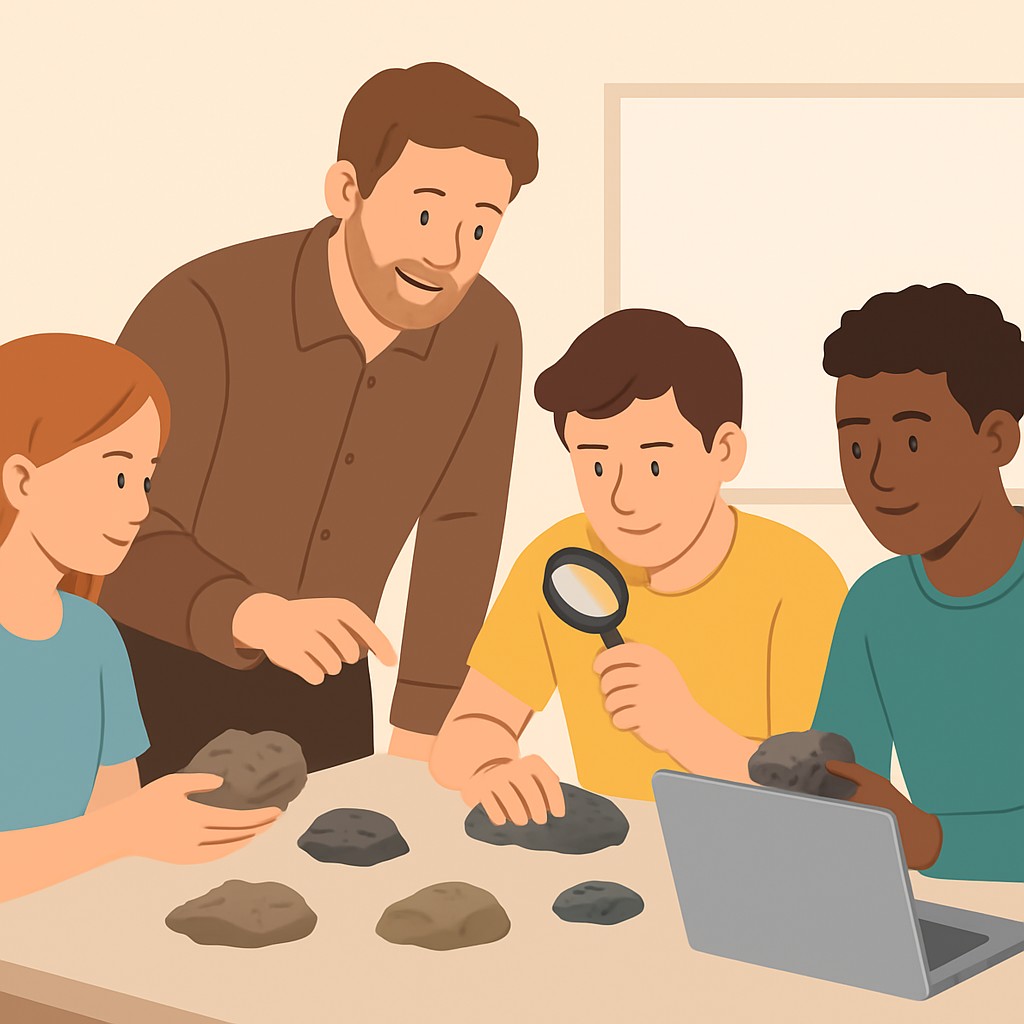
Use Accessible Real-World Data and Participatory Projects
Accessible data grounds learning in everyday contexts.
Participatory projects help students collect and use real data.
Prefer local datasets and simple tools for classroom relevance.
Why accessible data connects learning to life
Accessible data grounds geology numbers in everyday contexts.
Therefore, students see why measurements matter outside school walls.
Real-world data supports transferable analytical skills and local relevance.
Hands-on investigations inspire authentic data collection.
Framing and selecting data sources
Frame sources as observable and obtainable by students and communities.
Prefer datasets or observations that reflect local conditions and common tools.
Ensure data formats remain simple for plotting and interpretation.
Avoid relying only on remote or abstract figures that feel irrelevant.
Designing participatory projects
Invite students to co-design questions that matter to them and others.
Co-design increases ownership and motivation during data collection.
Master Calculations Instantly
Unlock solutions for math, physics, engineering, and chemistry problem with step-by-step clarity. No internet required. Just knowledge at your fingertips, anytime, anywhere.
Assign clear roles so teams manage measurement, recording, and plotting tasks.
Students learn collaboration and accountability alongside technical skills.
Project scaffolding elements
Begin with a focused question linked to community interests.
Define simple, repeatable measurement procedures for consistency.
Schedule regular collection intervals to build time-series understanding.
Plan reflection moments for interpretation and revision of methods.
- Start with a focused question that links to community interests.
- Define simple, repeatable measurement procedures for consistency.
- Schedule regular collection intervals to build time-series understanding.
- Plan reflection moments for interpretation and revision of methods.
Skills and practices students develop
Students practice measuring with attention to units and uncertainty.
They learn basic plotting to reveal trends and patterns.
Students interpret measurements to make evidence-based claims.
They practice communicating results to audiences beyond the classroom.
Assessment and reflection strategies
Use rubrics that emphasize data quality, reasoning, and communication.
Include peer feedback cycles to strengthen analytical thinking.
Provide short reflective prompts about what the data reveals and why.
Communicating findings beyond the classroom
Translate plots into clear messages for nontechnical audiences.
Have students explain why measurements matter for real decisions.
Encourage proposals of simple next steps based on the data.
This practice gives work purpose and connects to community interests.
Generic project templates to adapt
Use an observation transect to record repeated measurements along a local gradient.
Run short-duration monitoring that tracks a variable over days or weeks.
Compare measurements from two or more nearby sites for comparative sampling.
- Observation transect that records repeated measurements along a local gradient.
- Short-duration monitoring that tracks a variable over several days or weeks.
- Comparative sampling that contrasts measurements from two or more nearby sites.
Next steps for classroom implementation
Begin with a pilot activity to test feasibility and student interest.
Iterate protocols based on student feedback and initial results.
Scale projects gradually to deepen analytical complexity and relevance.
You Might Also Like: Geological Calculations That Reveal the Story Beneath Our Feet
Scaffold Numeracy Explicitly
Start by making numeracy goals visible and manageable for learners.
Then design routines that reveal strengths and gaps quickly.
Also make goals concrete, trackable, and easy to review.
Diagnostic Checks
Use brief tasks to gauge foundational number skills before new lessons.
Next employ quick concept probes that focus on common misunderstandings.
Additionally ask students to explain their reasoning in one sentence.
Master Calculations Instantly
Unlock solutions for math, physics, engineering, and chemistry problem with step-by-step clarity. No internet required. Just knowledge at your fingertips, anytime, anywhere.
- Probe basic arithmetic fluency with short calculation prompts.
- Probe proportional reasoning with simple comparison tasks.
- Probe unit awareness by asking students to label measurements mentally.
Stepwise Skill Progressions
Map each target skill into clear, achievable steps for learners.
Begin with concrete representations and then move to abstract symbols.
Moreover sequence practice so each step builds on the previous one.
- Identify prerequisite abilities before introducing new calculations.
- Create short learning cycles that isolate one subskill at a time.
- Design checkpoints that require students to demonstrate each subskill.
Visual Anchors for Number Sense
Provide consistent visual frames that students can reuse across topics.
For example offer fixed reference marks that show typical magnitudes.
Also supply simple spatial templates to organize numeric work visually.
- Use labeled reference points to compare relative sizes quickly.
- Use grids or bars that represent quantities in the same units.
- Use annotated axes that highlight scale and direction clearly.
Common-Sense Heuristics and Mental Models
Teach quick rules that guide estimation and sense-making under uncertainty.
Encourage students to estimate before calculating to check plausibility.
Also promote unit checks as a routine step in every calculation.
- Compare a result to an easy benchmark to detect errors fast.
- Break complex ratios into simpler multiplicative steps for clarity.
- Use inverse operations to verify answers when possible.
Strategies to Reduce Math Anxiety and Fix Misconceptions
Normalize struggle by framing errors as diagnostic information.
Then provide immediate, specific feedback that targets the misconception.
Additionally use low-stakes, frequent practice to build confidence steadily.
- Model common missteps and walk through corrected approaches aloud.
- Offer alternative representations when procedures become confusing.
- Celebrate partial progress to keep students motivated and resilient.
Classroom Routines and Assessment Loops
Establish short daily checks that inform instruction for the next lesson.
Next group students by specific skill needs rather than by overall grade.
Also iterate on tasks using diagnostic results to refine teaching targets.
- Design exit prompts that reveal one clear learning goal per lesson.
- Provide targeted mini-lessons based on patterns seen in diagnostics.
- Use student self-assessments to build metacognitive awareness of gaps.
Assess and Deepen Understanding Through Creative Outputs
This section explains how creative outputs deepen student understanding of data.
They clarify connections between measurements and geological processes.
You will see pedagogical steps and assessment criteria.
Designing Creative Assessment Tasks
Start with clear learning targets that connect numbers to geological meaning.
Provide open prompts that invite narrative and visual translation of data.
Define the expected scope and the numerical concepts students must address.
Allow students to choose a mode that fits their strengths and interests.
Criteria for Translating Numbers Into Stories
This section lists criteria for turning numbers into coherent geological stories.
Each criterion focuses on accuracy, clarity, reasoning, visuals, and audience.
Use these criteria when evaluating numerical interpretation and communication.
- Accuracy of numerical interpretation and correct use of units.
- Clarity of the narrative that links numbers to geological processes.
- Explicit explanation of reasoning and of data sources.
- Effectiveness of visuals or verbal cues in conveying scale and change.
- Audience awareness and suitability of language and level of detail.
Rubrics and Feedback Practices
Create rubrics that separate numerical reasoning from communication skills.
Share rubrics with students before they begin creative work.
Provide targeted and actionable feedback after drafts or rehearsals.
Ask students to respond with a short revision plan after feedback.
Peer Teaching and Narrated Walkthroughs
Engage students in peer teaching to reinforce numerical thinking.
Master Calculations Instantly
Unlock solutions for math, physics, engineering, and chemistry problem with step-by-step clarity. No internet required. Just knowledge at your fingertips, anytime, anywhere.
Encourage peers to ask clarifying questions and offer suggestions.
Require presenters to record a brief narrated walkthrough of choices.
- Students present numerical findings and explain their underlying logic.
- Peers ask clarifying questions and provide practical suggestions.
- Presenters record brief narrated walkthroughs that justify key choices.
- Use peer summaries to check for shared understanding and gaps.
Student-Made Infographics and the Revision Cycle
Ask students to produce an initial draft infographic that tells a numerical story.
Organize short peer review sessions focused on clarity and accuracy.
Then students revise visuals and captions based on concise feedback.
Collect final versions and a short reflection on numerical choices.
Accessibility and Differentiation
Offer multiple output formats to accommodate different strengths and needs.
Provide sentence starters, phrase banks, and visual templates as scaffolds.
Allow alternative evidence of understanding for varied numeracy skills.
Ensure captions, transcripts, and clear labels accompany all student outputs.
Using Creative Outputs Formatively and Summatively
Use drafts and walkthroughs as formative checkpoints during instruction.
Treat polished infographics or peer lessons as summative demonstrations of learning.
Archive student artifacts in a portfolio for longitudinal assessment.
Reflect on patterns across artifacts to adjust future instruction.
Additional Resources
Google search results for How to Teach Geology Numbers With More Wonder and Interest Geology
Bing search results for How to Teach Geology Numbers With More Wonder and Interest Geology


