


The Foundational Role of Calculation Skills in Understanding Core Academic Subjects
Calculation Skills as a Basis for Mathematical Learning
Calculation skills form the backbone of all mathematical understanding.
Students rely on these skills to solve problems accurately and efficiently.
Without strong calculation abilities, grasping advanced math concepts proves difficult.
Moreover, practice in calculation enhances logical thinking and numerical fluency.
Therefore, reinforcing these skills early improves overall math performance.
Impact of Calculation Skills on Science Education
Science subjects like physics and chemistry require precise calculation skills.
These skills help students measure, analyze, and interpret experimental data effectively.
Consequently, students can better understand formulas and scientific principles.
In addition, strong calculation skills enable learners to link theory with practical experiments.
This connection boosts comprehension and engagement in scientific disciplines.
Role in Economics and Social Sciences
Economics relies heavily on calculations to interpret financial information.
Students use calculation skills to work with statistics, percentages, and data analysis.
Similarly, social sciences incorporate numerical data to understand trends and patterns.
Therefore, proficiency in calculations supports critical thinking across these fields.
Ultimately, it equips students to evaluate information and make informed decisions.
Enhancing Problem-Solving Abilities Across Subjects
Calculation skills contribute significantly to broad problem-solving abilities.
When students handle numbers confidently, they approach problems with greater assurance.
Additionally, these skills encourage logical sequencing and step-by-step analysis.
Thus, learners transfer these competencies to tasks beyond arithmetic tasks.
For instance, they apply structured thinking in writing, coding, and reasoning challenges.
Developing Confidence through Mastery of Calculation
Confidence grows as students master fundamental calculation skills.
This growth reduces math anxiety and fosters a positive attitude toward learning.
Consequently, motivated students engage more deeply with academic content.
Educators like Laura Mitchell emphasize that calculation fluency underpins academic self-esteem.
Hence, investing time in nurturing these skills pays off across educational dimensions.
How Strong Calculation Abilities Improve Problem-Solving and Critical Thinking
Enhancing Analytical Skills Through Calculation
Strong calculation abilities sharpen analytical skills in academic contexts.
Students who excel in calculations can break down complex problems easily.
Moreover, they identify patterns and relationships within data effectively.
This skill allows them to approach problems with logical reasoning confidently.
Consequently, analytical thinking becomes more structured and focused.
Master Calculations Instantly
Unlock solutions for math, physics, engineering, and chemistry problem with step-by-step clarity. No internet required. Just knowledge at your fingertips, anytime, anywhere.
Boosting Critical Thinking with Accurate Calculations
Accurate calculations provide a solid foundation for critical evaluation.
Students evaluate information critically by verifying numerical data.
Furthermore, they question assumptions and assess the validity of solutions.
Thus, precise calculations promote thoughtful decision-making processes.
This approach helps avoid errors and supports stronger academic arguments.
Applying Calculation Skills to Diverse Problem Scenarios
Calculation skills extend beyond math-related subjects.
For example, economics and science require precise numerical problem-solving.
Additionally, students use calculations to analyze graphs and statistics.
These abilities prepare learners for real-world scenarios demanding quantitative reasoning.
Therefore, calculation proficiency strengthens overall problem-solving capacity.
Developing Logical Thought Through Step-by-Step Computation
Calculation requires following a sequence of logical steps to reach solutions.
This process cultivates methodical thinking habits in learners.
They learn to approach problems systematically, improving accuracy and efficiency.
As a result, students become adept at handling complex challenges.
Such skills enhance their performance across multiple academic disciplines.
Encouraging Confidence and Independence in Learning
Mastery of calculation builds students’ confidence in tackling tough problems.
They rely less on external help and trust their reasoning abilities.
Moreover, this independence fosters active engagement with course material.
It motivates continuous learning and intellectual curiosity.
Eventually, students develop resilience and perseverance in academic pursuits.
The Impact of Calculation Proficiency on Performance in Standardized Tests
Calculation Skills as a Foundation for Success
Calculation proficiency forms the backbone of many standardized test subjects.
Students who master calculations often demonstrate higher confidence in test-taking.
Moreover, strong calculation skills reduce time spent on solving math problems.
Therefore, calculation fluency allows students to allocate time efficiently during exams.
Test creators design questions that rely heavily on accurate and quick calculations.
Influence on Different Standardized Test Sections
Calculation plays a critical role in mathematics sections across various exams.
For instance, the SAT and ACT require quick mental arithmetic and problem-solving.
Similarly, sections in science tests demand precise calculations for data analysis.
Reading comprehension and verbal tests also occasionally involve numerical understanding.
Hence, calculation skills indirectly support better performance across diverse subjects.
Master Calculations Instantly
Unlock solutions for math, physics, engineering, and chemistry problem with step-by-step clarity. No internet required. Just knowledge at your fingertips, anytime, anywhere.
Correlation Between Calculation Ability and Overall Test Scores
Research consistently shows a strong link between calculation skills and test performance.
Students proficient in calculations typically achieve higher composite scores.
Furthermore, they adapt more easily to complex problem-solving scenarios.
This adaptation stems from their solid grasp of numerical concepts and accuracy.
Consequently, schools like Maplewood Preparatory emphasize calculation training to boost scores.
Common Challenges and How Proficiency Helps Overcome Them
Many students face anxiety when encountering challenging numerical problems.
Calculation proficiency helps reduce this anxiety by building familiarity and skill.
It also prevents careless mistakes caused by rushed or uncertain arithmetic.
Teachers such as Ms. Olivia Hayes encourage regular practice to enhance calculation speed.
Such practice supports students in managing test pressure and improving accuracy.
Strategies to Develop Strong Calculation Skills
Effective strategies include daily mental math exercises and timed quizzes.
Using tools like math apps can make calculation practice engaging and interactive.
Collaborative study groups enable peer learning and problem-solving discussion.
Additionally, integrating real-life scenarios strengthens practical calculation application.
Schools like Riverstone Academy recommend these methods for exam preparation.
Find Out More: The Power of Math in Solving Daily Challenges
Calculation Skills as a Gateway to Advanced STEM Education and Careers
Foundation for STEM Learning
Calculation skills provide a strong foundation for understanding complex STEM concepts.
Students who master calculations grasp mathematical principles more quickly.
Consequently, they can advance to higher-level subjects with confidence.
For example, grasping algebra and calculus relies heavily on calculation proficiency.
Moreover, science and engineering courses demand precise numerical problem-solving abilities.
Enhancing Problem-Solving Abilities
Calculation skills sharpen analytical thinking essential for STEM fields.
They enable learners to break down problems into manageable steps.
As a result, students develop systematic approaches to complex challenges.
Employers in technology and engineering value candidates with strong computational expertise.
Furthermore, effective calculation boosts innovation and research capabilities.
Opening Career Opportunities
Many STEM careers require advanced numerical and computational proficiency.
For instance, data scientists depend on precise calculations to analyze datasets.
Similarly, software developers use calculation skills in algorithms and coding.
Individuals with strong calculation skills often secure competitive scholarships.
Master Calculations Instantly
Unlock solutions for math, physics, engineering, and chemistry problem with step-by-step clarity. No internet required. Just knowledge at your fingertips, anytime, anywhere.
This advantage paves the way for prestigious programs and internships.
Supporting Lifelong Learning and Adaptability
Calculation skills foster adaptability in a rapidly evolving STEM landscape.
They allow professionals to learn new technologies and methodologies effectively.
Therefore, mastery of these skills ensures ongoing academic and career growth.
STEM disciplines evolve constantly, making numerical skills highly valuable.
In insight, calculation skills act as a critical gateway to success in STEM education and careers.
Uncover the Details: How Calculations Drive Innovation Across All Fields
Correlation between Calculation Competence and Overall Academic Confidence
Impact of Calculation Skills on Academic Self-Belief
Strong calculation skills directly boost students’ academic self-confidence.
When students solve math problems accurately, they feel more capable in other subjects.
Furthermore, calculation competence helps reduce anxiety during tests and homework.
This increased confidence encourages students to participate actively in class discussions.
Therefore, mastering basic calculations leads to a more positive attitude towards learning.
Influence on Performance Across Different Subjects
Calculation skills support understanding in subjects like science and economics.
For example, students with good math skills solve physics problems more efficiently.
Moreover, strong numerical ability simplifies data interpretation in social studies.
Consequently, students find it easier to complete assignments requiring quantitative reasoning.
This cross-disciplinary competence enhances overall academic performance and confidence.
Psychological Benefits of Calculation Mastery
Proficiency in calculations fosters a sense of achievement and motivation.
Students often feel empowered when they overcome challenging numerical tasks.
Additionally, this empowerment reduces fear of failure in exams and presentations.
In turn, learners develop resilience and a growth mindset toward academic challenges.
This mindset improves persistence across all areas of study.
Strategies to Improve Calculation Skills and Confidence
Educators should promote regular practice through engaging exercises.
Using real-world examples makes numerical concepts more relatable to students.
Moreover, personalized feedback helps learners identify areas needing improvement.
Encouraging peer collaboration also builds supportive learning environments.
These strategies collectively boost calculation ability and academic confidence.
Gain More Insights: Why Understanding Basic Math Improves Personal Finances
The role of calculation fluency in daily academic tasks and homework efficiency
Enhancing Daily Academic Performance
Calculation fluency enables students to solve math problems quickly and accurately.
Moreover, it reduces cognitive load, allowing focus on complex concepts.
Master Calculations Instantly
Unlock solutions for math, physics, engineering, and chemistry problem with step-by-step clarity. No internet required. Just knowledge at your fingertips, anytime, anywhere.
Students with strong skills handle arithmetic tasks confidently across subjects.
This ability supports science experiments, data analysis, and financial literacy.
As a result, students participate actively in classroom discussions and activities.
Improving Homework Efficiency
Calculation fluency accelerates completion of daily homework assignments.
It minimizes errors, decreasing the need for repeated corrections.
Consequently, students invest less time on basic computations.
They can allocate more effort to understanding new material.
Parents and teachers notice improved reliability and independence in students' work.
Building Confidence and Reducing Anxiety
Confidence grows when students master calculation tasks skillfully.
This growth lowers math anxiety, which often hinders academic progress.
Students become more willing to tackle challenging assignments.
Positive experiences encourage sustained engagement with quantitative subjects.
Therefore, calculation fluency contributes to a productive academic mindset.
Strategies to Develop Calculation Fluency
Practice through daily timed exercises sharpens mental math abilities.
Incorporating math games makes learning enjoyable and reinforces skills.
Using real-life scenarios helps students see practical applications.
Teachers can provide targeted feedback to address specific weaknesses.
Consistent efforts lead to measurable improvements in academic performance.
See Related Content: Essential Calculations for Smarter Decision-Making in Everyday Life
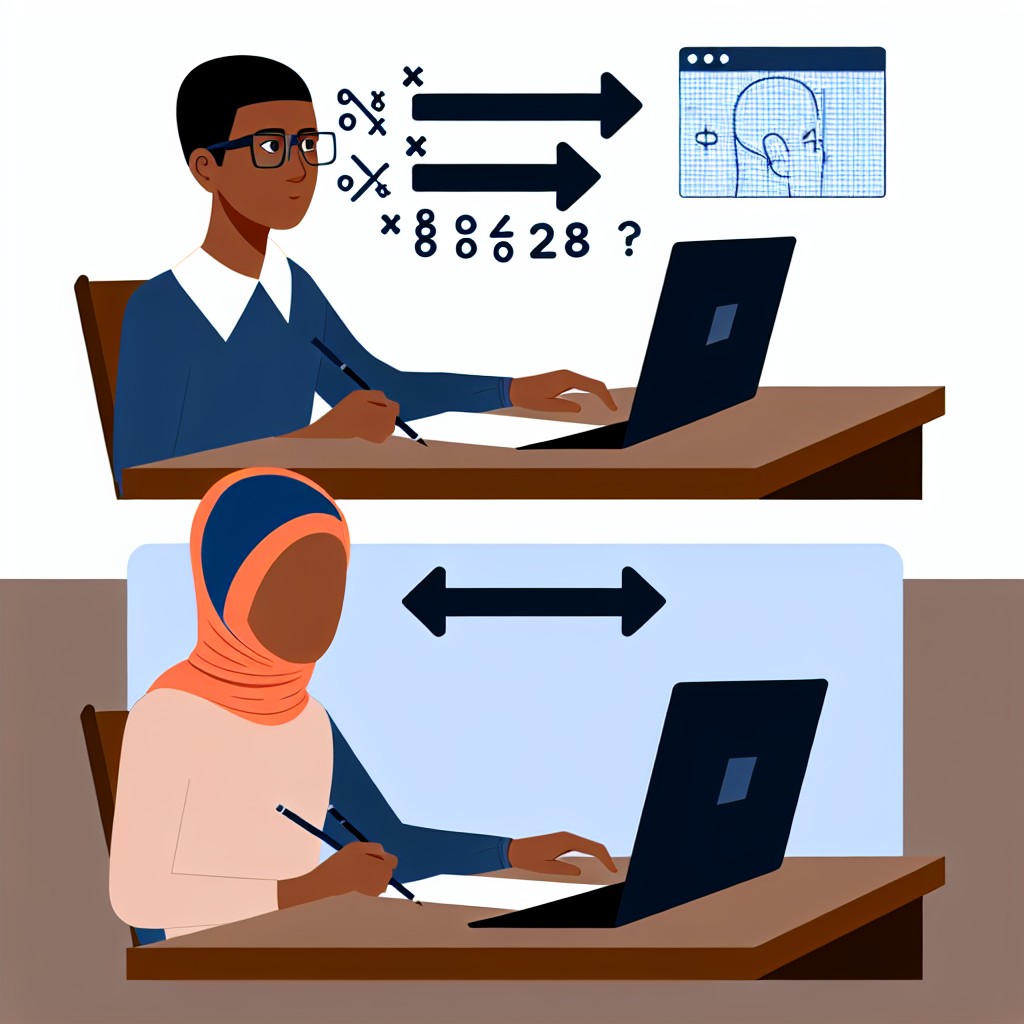
Strategies to Integrate Calculation Skill Development Across Different Subjects
Incorporating Calculation Skills in Science Classes
Science classes offer many opportunities to practice essential calculation skills.
Teachers can encourage students to analyze data through measurements and calculations.
For instance, physics lessons often require calculations related to speed, force, and energy.
Chemistry labs involve precise measurement and mole calculations.
Moreover, biology requires data interpretation and statistical analysis during experiments.
Therefore, integrating calculation exercises in science enhances both numerical and critical thinking skills.
Enhancing Math Understanding Through Real-World Applications
Connecting math problems to real-life contexts makes calculation skills more practical and engaging.
Students can explore budgeting, shopping, or construction to apply their math knowledge.
Additionally, collaboration with local businesses can provide projects involving financial calculations.
For example, a partnership with Anderson Engineering can offer design-based calculation tasks.
This approach motivates students to see math as relevant and useful beyond the classroom.
Master Calculations Instantly
Unlock solutions for math, physics, engineering, and chemistry problem with step-by-step clarity. No internet required. Just knowledge at your fingertips, anytime, anywhere.
Building Calculation Skills in Social Studies
Social studies classes can integrate calculation skills by analyzing historical and economic data.
Students can calculate population growth, inflation rates, or election statistics.
Teachers may use graphs and charts requiring mathematical interpretation.
Furthermore, geography lessons can include map scale calculations and distance estimations.
Thus, students learn to combine numerical analysis with contextual understanding.
Promoting Calculation Practice in Language Arts
Though less obvious, language arts can also support calculation skill development.
For example, analyzing poem structures may involve counting syllables or meter patterns.
Students can calculate reading times or word frequencies to explore textual features.
Creative writing assignments can challenge students to plan story timelines with numerical consistency.
Consequently, language arts help students appreciate numbers in diverse contexts.
Utilizing Technology to Reinforce Calculation Skills
Educational technology offers numerous tools to practice calculation across subjects.
Interactive apps like MathMaster and ScienceSolver provide tailored exercises.
Teachers can assign projects using spreadsheets to analyze and visualize data.
Moreover, gamified learning platforms increase engagement with calculation challenges.
Using technology ensures students receive immediate feedback, enhancing learning outcomes.
Encouraging Cross-Disciplinary Projects
Cross-disciplinary projects require students to apply calculation skills in multifaceted ways.
For example, designing a community garden involves math, biology, and economics.
Such projects develop problem-solving, teamwork, and practical calculation abilities.
Teachers like Ms. Laura Middleton have successfully implemented STEM-integrated projects.
Interdisciplinary tasks foster deeper understanding and retention of calculation skills.
The Long-Term Benefits of Early Calculation Skill Mastery for Academic Success
Foundation for Advanced Learning
Early mastery of calculation skills builds a strong academic foundation.
Students who excel in basic math grasp complex concepts faster later.
Consequently, they experience less frustration and greater confidence in school.
Moreover, strong calculation skills promote logical thinking and problem-solving.
This foundation supports achievement across various subjects, including science and technology.
Improved Cognitive Development
Calculating early enhances critical brain functions like memory and concentration.
It encourages mental agility and sharpens analytical reasoning abilities.
Therefore, children develop skills that benefit their overall intellectual growth.
Additionally, these cognitive improvements help students adapt to new academic challenges effectively.
Positive Impact on Academic Performance
Students with solid calculation skills perform better on tests and assignments.
Master Calculations Instantly
Unlock solutions for math, physics, engineering, and chemistry problem with step-by-step clarity. No internet required. Just knowledge at your fingertips, anytime, anywhere.
They complete tasks more quickly and with greater accuracy.
In turn, this leads to higher grades and increased academic motivation.
Teachers often notice such students participate more actively in class discussions.
Enhanced Confidence and Motivation
Mastering calculations early boosts students’ self-esteem.
They feel more capable and willing to tackle difficult problems.
This confidence fosters a positive attitude toward learning in general.
Subsequently, motivated students pursue academic goals with determination.
Preparation for Future Career Success
Strong calculation skills open doors to numerous career opportunities.
Professions in engineering, finance, and technology rely heavily on these abilities.
Therefore, early mastery equips students for long-term professional growth.
Companies like Stellar Innovations and Meridian Analytics value employees with such skills.
Support from Educators and Parents
Teachers recommend incorporating practical calculation exercises early in education.
Parents can support by engaging children in everyday math activities.
For example, budgeting weekly allowances or measuring ingredients during cooking.
These real-life applications make learning calculation meaningful and enjoyable.
Challenges Students Face Without Solid Calculation Skills and How to Address Them
Common Difficulties Experienced by Students
Students without strong calculation skills often struggle with basic arithmetic operations.
They frequently find it hard to solve problems quickly and accurately.
Moreover, poor calculation skills can cause frustration and decreased motivation.
Consequently, students may develop a fear or dislike of math-related subjects.
These challenges hinder their performance in subjects beyond mathematics.
For example, subjects like physics, chemistry, and economics rely heavily on calculation.
Impact on Academic Performance
Weak calculation skills lead to lower test scores and incomplete assignments.
Students often spend excessive time checking simple calculations.
This inefficiency reduces overall study time for other important topics.
Teachers notice gaps in understanding and may assign remedial work.
Such setbacks reduce students’ confidence and academic engagement.
Strategies to Strengthen Calculation Skills
Practice Regularly with Real-Life Problems
Encourage students to solve practical problems involving money, measurements, or time.
This application develops meaningful understanding and retention of calculation methods.
Use Interactive Tools and Technology
Many apps and online platforms offer engaging calculation practice tailored to skill levels.
These tools provide immediate feedback, which helps correct mistakes quickly.
Master Calculations Instantly
Unlock solutions for math, physics, engineering, and chemistry problem with step-by-step clarity. No internet required. Just knowledge at your fingertips, anytime, anywhere.
Incorporate Peer Learning and Group Activities
Group exercises foster collaboration and peer teaching, reinforcing calculation skills.
Students benefit from explaining processes and learning from others’ approaches.
Provide Targeted Support and Resources
Educators should identify individual weaknesses and offer personalized guidance.
Extra worksheets, tutoring sessions, and workshops can bridge specific skill gaps.
Encourage a Positive Mindset Towards Math
Parents and teachers must promote confidence and resilience in solving calculations.
Celebrating small successes builds motivation and a growth-oriented attitude.
Benefits of Addressing Calculation Challenges Early
Improved calculation skills enhance overall academic achievement across subjects.
Students gain greater independence and efficiency in learning tasks.
Early intervention prevents long-term difficulties in advanced courses.
Boosted confidence helps students approach complex problems with less anxiety.
The Importance of Instructional Methods That Emphasize Calculation Understanding
Building a Strong Mathematical Foundation
Effective instructional methods focus on helping students truly understand calculations.
Teachers like Maria Delgado emphasize conceptual learning over rote memorization.
This approach ensures students grasp the ‘why’ behind the numbers.
Consequently, they develop flexible thinking when solving various problems.
Moreover, understanding calculations reduces math anxiety and builds confidence.
Engaging Students Through Interactive Learning
Interactive methods encourage active participation during lessons.
For example, Riverview Elementary uses manipulatives to demonstrate addition and subtraction.
These hands-on tools help learners visualize abstract concepts clearly.
As a result, students retain information longer and apply it effectively.
Additionally, group activities foster collaboration and peer-assisted learning.
Integrating Technology to Enhance Calculation Skills
Technology plays a crucial role in modern calculation instruction.
Apps developed by NumericMind provide personalized practice for diverse skill levels.
Adaptive software adjusts difficulty based on individual progress instantly.
This tailored feedback strengthens areas of weakness promptly and efficiently.
Furthermore, digital games motivate students by making learning enjoyable.
Training Educators for Better Instructional Outcomes
Professional development ensures teachers are equipped with effective strategies.
Organizations like the National Math Council organize workshops on calculation pedagogy.
These sessions share evidence-based techniques that improve student outcomes.
Consequently, educators like Liam Chen have transformed their classroom practices dramatically.
Ongoing support helps maintain high-quality instruction throughout the school year.
Master Calculations Instantly
Unlock solutions for math, physics, engineering, and chemistry problem with step-by-step clarity. No internet required. Just knowledge at your fingertips, anytime, anywhere.
Academic and Career Advantages of Calculation Understanding
Students with strong calculation skills excel in higher-level math courses.
They also perform better in subjects like physics and engineering.
Employers such as TechNova Solutions value employees with solid numerical reasoning.
Therefore, this foundational skill enhances both academic and career opportunities.
Instructional methods that deepen calculation understanding empower lifelong learners.


