


Introduction to Unit Conversions and Their Importance in Calculations
Understanding Unit Conversions
Unit conversions involve changing quantities from one measurement unit to another.
They help us compare and work with different measurement systems effectively.
For example, converting miles to kilometers enables consistent distance calculations.
Moreover, unit conversions play an essential role in science, engineering, and everyday tasks.
The Role of Unit Conversions in Simplifying Calculations
Unit conversions simplify complex calculations by standardizing measurements.
When different units are involved, conversions establish a common ground for calculation.
Therefore, they reduce errors and improve the accuracy of results.
Engineers at Vanguard Dynamics rely on unit conversions for precise design work.
Benefits of Using Unit Conversions in Various Fields
Unit conversions enhance communication and collaboration across international teams.
They enable financial analysts at Crestview Capital to align data from global markets.
Additionally, medical professionals depend on conversions to administer correct medication doses.
In construction, project managers use unit conversions to estimate materials accurately.
Consequences of Improper Unit Conversion in Professional Settings
Without unit conversions, misinterpretations of data often occur, causing costly mistakes.
For instance, an architect at Meridian Design once faced delays due to measurement confusion.
Thus, mastering unit conversions prevents misunderstandings and saves time.
Lastly, automated software tools integrate unit conversions to assist efficient workflows.
Common Types of Units and Systems Used in Education and Real Life
Measurement Systems in Daily Use
People use different measurement systems worldwide.
Two major systems dominate: the metric system and the imperial system.
The metric system uses units like meters, liters, and grams.
It is the official system in most countries and science fields.
In contrast, the imperial system uses feet, gallons, and pounds.
It remains common in the United States and some other countries.
Therefore, learning both systems helps in various real-life situations.
Common Units in Education
Education emphasizes fundamental units to build student knowledge.
Length is often taught using meters, centimeters, and millimeters.
Students also learn about mass through grams and kilograms.
Moreover, volume is introduced using liters and milliliters.
Time units such as seconds, minutes, and hours are essential too.
Beyond basics, students explore temperature in Celsius or Fahrenheit scales.
Understanding these units prepares students for scientific and practical tasks.
Master Calculations Instantly
Unlock solutions for math, physics, engineering, and chemistry problem with step-by-step clarity. No internet required. Just knowledge at your fingertips, anytime, anywhere.
Units Used in Professional Fields
Various professions require specialized units to measure accurately.
Engineers commonly use Newtons to quantify force applied on structures.
Medical professionals often measure doses in milligrams or milliliters.
Electricians rely on volts, amps, and ohms to describe electrical properties.
Cooks and chefs frequently convert teaspoons, tablespoons, and cups in recipes.
Furthermore, pilots calculate distances using nautical miles and altitude in feet.
Hence, unit conversions become vital when shifting between different measurement forms.
Significance of Mastering Multiple Units
Familiarity with diverse units enhances communication across cultures and industries.
It prevents errors during cooking, construction, science experiments, and travel.
Additionally, global trade depends on precise unit conversions to maintain standards.
For example, manufacturers must meet international size and weight specifications.
Likewise, scientists collaborate using standardized units to share accurate data.
Mastering common units smooths complex calculations in education and real life.
Step-by-step methods for converting units accurately
Identify the Units Involved
Start by clearly identifying the unit you want to convert from.
Next, determine the unit you want to convert to.
For example, convert from miles to kilometers or pounds to kilograms.
Understanding both units will help ensure an accurate conversion.
Find the Appropriate Conversion Factor
Look up the exact conversion factor for the units involved.
Conversion factors are usually fixed ratios between two units.
For instance, 1 mile equals 1.60934 kilometers.
Ensure the factor is precise to maintain calculation accuracy.
Set Up the Conversion Equation Correctly
Write the original value as a fraction or multiplication expression.
Then multiply by the conversion factor arranged as a fraction.
The units that you want to eliminate should cancel out.
This step prevents errors and keeps units consistent during calculations.
Use Dimensional Analysis for Clarity
Always include units in every calculation step for clarity.
This method helps track which units cancel and which remain.
Dimensional analysis reduces the chance of mixing incompatible units.
Therefore, it simplifies complex problems involving multiple conversions.
Perform the Mathematical Calculation
Carry out multiplication or division as indicated by the conversion setup.
Master Calculations Instantly
Unlock solutions for math, physics, engineering, and chemistry problem with step-by-step clarity. No internet required. Just knowledge at your fingertips, anytime, anywhere.
Use a calculator or software to avoid manual errors when needed.
Round your results based on the required precision or context.
Remember that significant figures matter in scientific and technical settings.
Verify the Final Unit and Value
Check that the final result’s unit matches the desired target unit.
Also, confirm the numerical value makes logical sense for the problem.
If it seems unusually large or small, re-examine the conversion steps.
Verification ensures confidence in your conversion and calculation.
Apply Consistency When Handling Multiple Conversions
When converting multiple units, keep track of each conversion factor.
Maintain consistent units throughout your entire calculation process.
Use tables or conversion charts created by experienced engineers or scientists.
This habit prevents confusion and enhances efficiency in calculations.
Utilize Reliable Tools and Resources
Consider trusted apps or websites designed for unit conversions.
These tools often include common and specialized units in various fields.
However, always understand the underlying method to avoid overreliance.
Combining tools with fundamental skills leads to accurate and quick results.
Delve into the Subject: Why Unit Conversion Is a Critical Skill in Science
Role of Unit Conversions in Reducing Calculation Errors
Preventing Mistakes Through Standardization
Unit conversions create a standardized way to handle measurements.
They reduce confusion from using different units in calculations.
Engineers at Solstice Engineering rely heavily on conversions to maintain accuracy.
Their project reports contain fewer errors and inconsistencies as a result.
Accurate unit conversion acts as a safeguard against misinterpretation of values.
Enhancing Clarity in Complex Calculations
Unit conversions clarify values before applying formulas or computations.
This clarity helps analysts like Ethan Park spot calculation errors early.
Consistent units enable seamless collaboration across international teams.
Companies such as Nova Tech avoid costly miscalculations because of this.
Reducing Cognitive Load and Simplifying Processes
Converting all quantities to a common unit makes calculations straightforward.
This method lessens the mental effort required to track various unit types.
Technicians at Pinnacle Systems report fewer mistakes when working with converted units.
Limiting mental strain contributes significantly to minimizing errors.
Effective Practices for Leveraging Unit Conversions
- Always double-check conversion factors before using them in calculations.
- Use reliable tools or software designed specifically for unit conversions.
- Train team members thoroughly on standard measurement units used in projects.
- Maintain clear documentation of units throughout the calculation process.
See Related Content: Unit Conversion Hacks for Everyday Efficiency and Accuracy
Master Calculations Instantly
Unlock solutions for math, physics, engineering, and chemistry problem with step-by-step clarity. No internet required. Just knowledge at your fingertips, anytime, anywhere.
Examples of Complex Problems Simplified by Unit Conversions
Converting Fuel Efficiency for Automotive Engineers
Automotive engineer Michael Torres faced challenges comparing fuel efficiencies.
He needed to convert miles per gallon to liters per 100 kilometers.
By applying unit conversions, he quickly standardized all data.
This step eliminated confusion and enhanced accuracy in his calculations.
Consequently, Michael developed more reliable fuel consumption models.
Calculating Medication Dosages in Healthcare
Nurse practitioner Emma Caldwell managed dosage calculations for diverse patients.
Many prescriptions required converting milligrams to micrograms accurately.
Unit conversions ensured correct medication administration despite complex units.
Therefore, Emma reduced dosage errors significantly during treatments.
This process simplified decision-making in fast-paced healthcare settings.
Architectural Design and Material Measurements
Architect Lucas Chen designed a complex building with mixed measurement units.
He converted inches to centimeters to unify the construction specifications.
By doing so, Lucas streamlined communication with international suppliers.
In addition, it minimized costly mistakes during material ordering and usage.
Ultimately, unit conversions improved project efficiency and collaboration.
Financial Analysts Working with Currency and Time Units
Financial analyst Sofia Mitchell evaluated investments across global markets.
She converted currency values and time units for consistent comparisons.
For instance, Sofia changed annual rates to monthly equivalents accurately.
This conversion allowed clearer insights into investment performance.
Consequently, Sofia delivered precise recommendations to her clients.
Physics Research Involving Mixed Measurement Systems
Physicist Rajiv Kapoor conducted experiments using both metric and imperial units.
He converted all lengths and masses to SI units for uniform data analysis.
This approach prevented misunderstandings and inconsistencies in results.
Additionally, it facilitated sharing findings with the international scientific community.
Therefore, Rajiv’s research maintained high standards of precision and clarity.
Delve into the Subject: How to Avoid Common Errors in Unit Conversions
Use of Conversion Factors
Defining Conversion Factors
Conversion factors bridge the gap between different measurement units.
They represent ratios that relate one unit to another.
For example, 1 inch equals 2.54 centimeters exactly.
By using these factors, calculations involving units become manageable.
Master Calculations Instantly
Unlock solutions for math, physics, engineering, and chemistry problem with step-by-step clarity. No internet required. Just knowledge at your fingertips, anytime, anywhere.
Applying Conversion Factors in Calculations
First, identify the units you want to convert from and to.
Next, choose the appropriate conversion factor relating these units.
Then, multiply your original measurement by the conversion factor.
This process ensures correct unit transformation without altering value.
Thus, tasks that seem complicated become straightforward and reliable.
Benefits of Using Conversion Factors
They reduce errors often caused by manual unit changes.
Besides, they improve consistency across different calculations.
Moreover, they save time by simplifying otherwise lengthy processes.
Dimensional Analysis Simplifies Problem Solving
Understanding Dimensional Analysis
Dimensional analysis uses units as guides throughout calculations.
It relies on the principle that units must balance on both sides.
Each quantity includes dimensions like length, time, or mass.
Tracking these dimensions ensures the final answer makes physical sense.
Implementing Dimensional Analysis
Begin by writing down the problem with all units clearly stated.
Next, convert all units to compatible forms using conversion factors.
Then, cancel units that appear both in numerator and denominator.
Finally, check if the remaining units match the desired dimension.
This method prevents mistakes and reinforces understanding of concepts.
Advantages in Complex Calculations
Dimensional analysis helps identify errors early in the process.
It connects mathematical operations with real-world quantities clearly.
Engineers and scientists frequently apply it to verify measurable results.
Consequently, it builds confidence and accuracy in technical tasks.
Practical Examples Demonstrating Simplification
Converting Speeds in Transportation
Imagine Lucas needs to convert miles per hour to meters per second.
He uses conversion factors for miles to meters and hours to seconds.
Then, dimensional analysis verifies each step’s correctness.
This approach lets Lucas quickly and confidently complete tasks.
Cooking Measurements Made Easy
Sophia often adjusts recipes that use different measurement units.
By applying conversion factors, she converts cups to milliliters seamlessly.
She also employs dimensional analysis to ensure ingredient proportions stay intact.
This simplifies her cooking and improves recipe accuracy.
You Might Also Like: How Global Trade Relies on Accurate Unit Conversions
Master Calculations Instantly
Unlock solutions for math, physics, engineering, and chemistry problem with step-by-step clarity. No internet required. Just knowledge at your fingertips, anytime, anywhere.
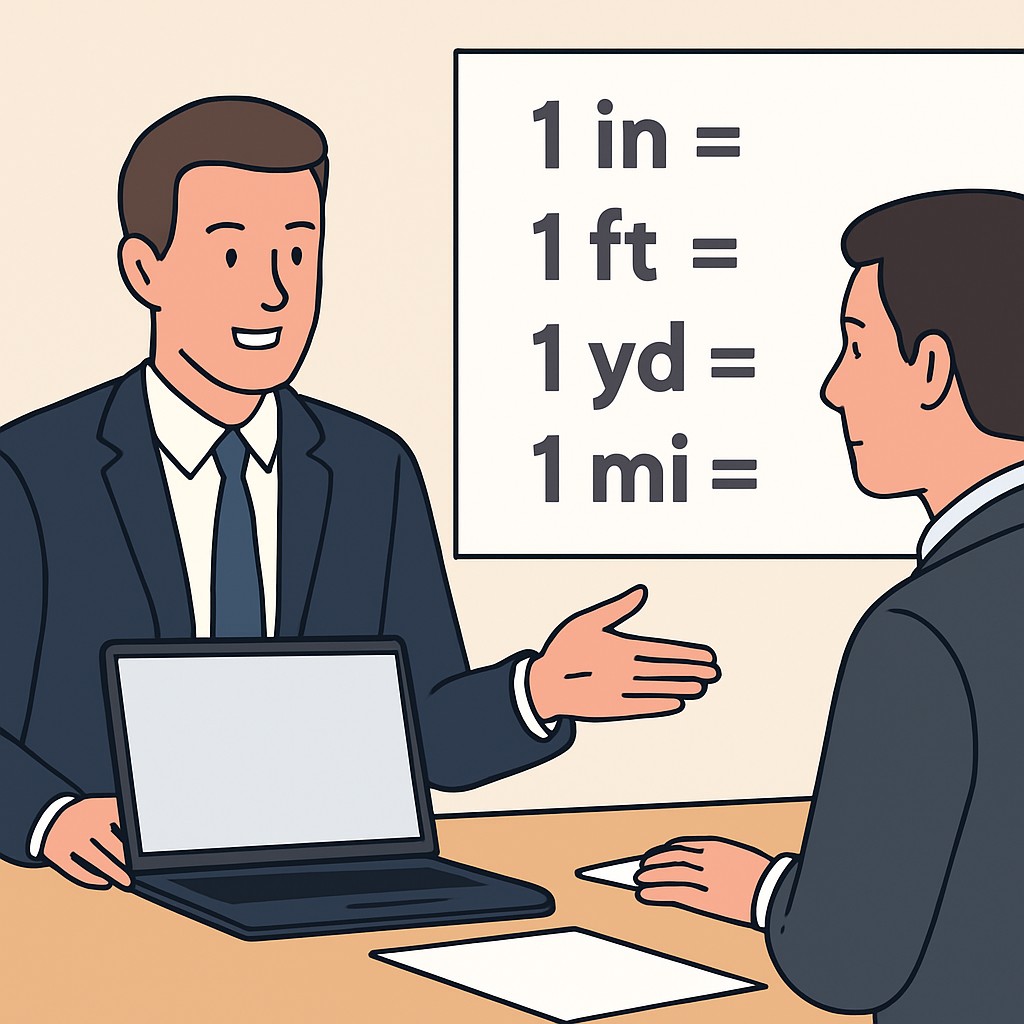
Applications of Unit Conversions Across Different Subjects and Industries
Science and Engineering
Scientists regularly convert units to standardize measurements during experiments.
Chemists convert moles to grams to analyze substances accurately.
Engineers use unit conversions to ensure designs meet safety standards.
They convert between metric and imperial units when collaborating internationally.
This process reduces errors and streamlines project communication effectively.
Healthcare and Medicine
Medical professionals use unit conversions to administer correct medication dosages.
They convert between milligrams and micrograms to tailor treatments precisely.
Additionally, converting units helps interpret lab results accurately.
Translating blood glucose levels from mmol/L to mg/dL aids diagnosis globally.
Unit conversions enhance patient safety and treatment outcomes.
Finance and Business
In finance, unit conversions help compare currencies and calculate exchange rates.
Businesses convert measurements for shipping, packaging, and inventory management.
Multinational companies adjust units to comply with regional regulations.
This practice ensures accurate pricing and cost estimations across markets.
Unit conversions contribute to operational efficiency and profitability.
Construction and Architecture
Architects convert units to produce blueprints understandable worldwide.
Contractors convert measurements to procure materials accurately.
They translate dimensions from feet to meters or vice versa for clarity.
Unit conversions minimize material waste and schedule delays.
Conversions support project completion within budget and timeline.
Everyday Life and Technology
People use unit conversions for cooking recipes from different cultures.
Travelers convert currency, distance, and temperature units to navigate effectively.
Technologists convert data storage units to optimize device performance.
Converting gigabytes to megabytes helps manage memory utilization.
Unit conversions simplify daily tasks and technological applications.
Tips and Best Practices for Mastering Unit Conversions
Understand the Basics of Units and Their Relationships
Start by learning common units and their standard symbols.
For example, know that 1 kilometer equals 1000 meters.
Moreover, grasp how different measurement systems relate to each other.
This foundation helps when dealing with unfamiliar units.
Consult reliable references, such as National Institute of Standards data, for accuracy.
Master Calculations Instantly
Unlock solutions for math, physics, engineering, and chemistry problem with step-by-step clarity. No internet required. Just knowledge at your fingertips, anytime, anywhere.
Use Conversion Factors Effectively
Conversion factors serve as ratios to change one unit to another correctly.
Always write the conversion factor as a fraction for clarity.
For instance, convert inches to centimeters using 1 inch = 2.54 centimeters.
Remember to cancel units properly to avoid mistakes.
Therefore, practice using conversion factors in different problems regularly.
Apply Dimensional Analysis for Accuracy
Dimensional analysis involves tracking units throughout calculations.
It ensures that final answers have the correct unit dimensions.
Begin by writing down known values with their units explicitly.
Then, multiply or divide by conversion factors to change units step-by-step.
Ultimately, this method reduces errors and boosts confidence.
Utilize Tools and Technology
Many apps and online converters simplify unit conversions efficiently.
For example, engineers often use software like UnitMaster or ConvertX.
These tools save time and help verify manual calculations.
Still, understand the conversion logic to catch any tool errors.
In addition, spreadsheet programs like Excel support custom conversion formulas.
Practice with Real-World Examples
Try converting units encountered in daily life, like cooking measurements or travel distances.
For example, convert miles to kilometers when planning a road trip.
Likewise, convert Fahrenheit to Celsius for weather forecasts.
Such exercises improve practical skills and reinforce concepts.
Furthermore, discuss challenges and solutions with teammates or instructors.
Keep a Conversion Reference Handy
Create a personal cheat sheet that includes common conversions and formulas.
This resource speeds up your workflow during complex calculations.
Update it regularly as you learn new units or techniques.
Additionally, label examples clearly to avoid confusion under pressure.
This ensures consistent and reliable conversions every time.
Technological Tools That Simplify Unit Conversions
Online Conversion Platforms
Online platforms like ConvertiMax offer quick and accurate unit conversions.
They support numerous units ranging from length to temperature and beyond.
Moreover, these sites have user-friendly interfaces ideal for professionals like engineers.
For example, Meridian Engineering Solutions frequently uses ConvertiMax in project calculations.
Therefore, such tools reduce manual calculation errors and save valuable time.
Master Calculations Instantly
Unlock solutions for math, physics, engineering, and chemistry problem with step-by-step clarity. No internet required. Just knowledge at your fingertips, anytime, anywhere.
Mobile Applications for Unit Conversion
Mobile apps provide convenience by enabling conversions anywhere at any time.
Apps like UnitWise and MeasureMate have earned positive reviews for reliability.
Furthermore, these apps often integrate additional features like formula references or currency exchanges.
Technology consultant Javier Molina recommends MeasureMate for field engineers and scientists.
Consequently, mobile solutions help professionals maintain productivity outside the office.
Scientific Calculators Equipped with Unit Conversion Functions
Scientific calculators from brands like Casio and Sharp include dedicated conversion functions.
They allow quick switching between units without leaving the calculator interface.
Additionally, these calculators support complex conversions, such as between mass and volume.
Dr. Elena Ramirez, a physics professor, regularly demonstrates these features during lectures.
As a result, students grasp unit conversion concepts more effectively with these tools.
Integration of Unit Conversion in Engineering Software
Software such as SolidBuild Pro and ArcTech CAD incorporates unit conversion capabilities.
Users can seamlessly input measurements in varied units, streamlining design workflows.
Moreover, these programs automatically adjust units during complex simulations.
Design lead Marcus Yeung highlights how automatic conversions prevent costly errors.
Thus, integrated conversion tools significantly boost accuracy and efficiency in engineering projects.
Advantages of Employing Technological Conversion Solutions
Using technological tools ensures precision in unit conversions.
They reduce the risk of human error during calculations.
In addition, these solutions improve speed, especially with repetitive tasks.
Organizations like Greenfield Energy have reported enhanced project workflows thanks to these tools.
Ultimately, technology empowers professionals to focus on problem-solving rather than manual conversions.
Impact of Unit Conversion Skills on Overall Mathematical Proficiency
Enhancing Problem-Solving Abilities
Unit conversion skills sharpen critical thinking in mathematics.
They enable students to approach complex problems with confidence.
Moreover, mastering conversions allows smoother transitions between measurement systems.
Consequently, learners develop flexibility in interpreting data and solving challenges.
This adaptability translates to improved overall problem-solving proficiency.
Building a Stronger Foundation in Math Concepts
Understanding units links abstract math concepts to real-world applications.
Students grasp relationships between quantities more effectively through conversion practice.
As a result, they develop stronger number sense and measurement comprehension.
Therefore, unit conversions reinforce fundamental mathematical principles consistently.
Improving Accuracy and Precision
Unit conversion requires attention to detail and exact calculations.
Master Calculations Instantly
Unlock solutions for math, physics, engineering, and chemistry problem with step-by-step clarity. No internet required. Just knowledge at your fingertips, anytime, anywhere.
Practicing conversions reduces errors in measurement and computation.
By doing so, students increase their accuracy in various mathematical tasks.
Additionally, this precision boosts confidence in handling data and formulas.
Facilitating Interdisciplinary Learning
Skills in unit conversion benefit fields beyond pure mathematics.
Science, engineering, and economics often rely on accurate conversions.
Hence, proficiency in units enhances performance across multiple disciplines.
Students become more prepared for complex real-world problems and applications.
Encouraging Logical Thinking and Consistency
Conversions follow consistent rules that require logical sequencing.
Mastery develops systematic approaches to tackling mathematical questions.
Therefore, learners cultivate disciplined reasoning skills through unit practice.
In turn, these skills support higher-order thinking and problem-solving.
Additional Resources
Real-world gen AI use cases from the world’s leading organizations
Understanding Roblox Physics and Their Conversions to Real Units


