


Gamify Practice
Gamify Practice organizes learning into focused activities.
Furthermore, it blends short challenges, badges, leaderboards, and adaptive games.
Consequently, it motivates sustained practice while supporting skill development.
Short Timed Challenges
Short timed challenges create focused practice windows.
Also, offer varied durations to match different practice goals.
However, include unscored rounds so learners build skills without pressure.
Badges and Rewards
Badges signal progress and encourage continued effort.
Moreover, design badges to reflect demonstrated skill growth rather than task completion.
Also, use clear labels so learners understand each badge meaning.
Leaderboards with Purpose
Leaderboards can motivate through friendly comparison.
However, implement options to prevent discouragement for developing learners.
Therefore, provide multiple leaderboard views that highlight diverse strengths.
Adaptive Games Rewarding Mastery
Adaptive games adjust challenge to each learner’s current ability.
Consequently, they support steady and personalized skill development.
Importantly, reward accuracy and conceptual understanding over raw speed.
Additionally, require mastery checkpoints before learners advance to harder levels.
Design Principles for Fair Motivation
Design clear goals and transparent progress indicators for every activity.
Moreover, prioritize mastery milestones instead of emphasizing fastest times.
Also, ensure accessibility so all learners can engage with game elements.
Furthermore, collect learner feedback to refine challenges over time.
Practical Implementation Ideas
Consider short rounds and optional practice modes for focused sessions.
Also, link badges to milestones that reflect demonstrated skill growth.
Finally, allow filters so users view class, group, or personal leaderboards.
- Create brief timed rounds with an optional practice mode.
- Introduce milestone badges tied to demonstrated skill improvements.
- Provide leaderboard filters for class, group, and personal views.
- Use adaptive difficulty that increases after learners show consistent mastery.
Contextual Problems and Purposeful Calculation
This section discusses contextual problems and calculation practice.
It shows why computations need purpose for learners.
The text links context to motivation and meaningful outcomes.
Why Contextual Problems Work
Contextual problems place calculations into meaningful situations for students.
They show practical purpose and thereby increase student motivation.
Furthermore, they help students connect abstract procedures to real outcomes.
Moreover, contextual tasks promote deeper reasoning over rote steps.
Master Calculations Instantly
Unlock solutions for math, physics, engineering, and chemistry problem with step-by-step clarity. No internet required. Just knowledge at your fingertips, anytime, anywhere.
Designing Real-World Projects
Designing projects gives context for student calculations.
They encourage choices in methods and foster collaboration.
Authentic materials help learners see relevance.
Project Features
- Include clear goals that require computation to achieve outcomes.
- Keep tasks open ended so students choose strategies and methods.
- Allow collaboration so learners discuss choices and verify results.
- Provide authentic materials or datasets that feel relevant to learners.
Implementation Tips
Start with a simple framing scenario to set context and purpose.
Then break tasks into manageable calculation steps for scaffolded support.
Next offer choice in tools so students select methods that suit them.
Finally schedule time for sharing methods and reflecting on results.
Using Stories to Teach Calculation
Embed calculations within short narratives that introduce a problem need.
Consequently, students see why each computation matters in the story.
Use characters or situations that present authentic decision points for calculation.
Then prompt students to justify numeric choices with story-based reasoning.
Cross-Curricular Tasks
Link calculation tasks to other subjects to broaden relevance and context.
For example, pair math with visual projects or data investigations in class.
Moreover, integrate writing tasks so students explain their reasoning in words.
Also coordinate with other teachers to align goals and assessment expectations.
Assessment and Reflection Strategies
Assess both the calculation process and the contextual decision making.
Use rubrics that value explanation, estimation, and appropriate method use.
Then build short reflection prompts for students to evaluate their approach.
Finally encourage revisions so learners apply feedback to improved calculations.
Concrete to abstract: use manipulatives, visual models and interactive simulations to build conceptual understanding
This section presents a progression from manipulatives to abstract notation.
It shows how visual and interactive tools act as bridges for learner understanding.
Teachers should orchestrate the transition while monitoring conceptual growth.
Why start with manipulatives
Manipulatives make abstract ideas tangible for learners.
They help students link actions to symbols and to procedures.
Concrete interactions reduce cognitive load during initial learning.
Visual models that clarify concepts
Visual models reveal structure and relationships within number ideas.
Diagrams help learners see equivalence and proportional change.
Teachers can layer visuals to show gradual abstraction.
Interactive simulations as bridges
Interactive simulations let students experiment with mathematical properties safely.
They support inquiry and provide instant feedback loops.
Master Calculations Instantly
Unlock solutions for math, physics, engineering, and chemistry problem with step-by-step clarity. No internet required. Just knowledge at your fingertips, anytime, anywhere.
Simulations can embody dynamic changes that static models cannot.
Classroom strategies for implementation
Start lessons with hands-on tasks to ground new concepts.
Then add visual representations to link action and notation.
Next introduce interactive simulations to test student conjectures and patterns.
Finally prompt students to describe connections in their own words.
Scaffolding transitions to symbolic procedures
Begin with explicit comparisons between models and symbolic notation.
Subsequently reduce reliance on concrete props in gradual steps.
Ultimately students should explain why procedures work before speed becomes valued.
Assessing conceptual understanding
Use tasks that require explanation and representation instead of only answers.
Additionally observe how students move between concrete, visual, and symbolic forms.
Then adjust supports based on those observations and emerging needs.
Explore Further: Making Math Calculations Feel More Exciting in the Classroom
Scaffolded Progression
Scaffolded progression helps learners build calculation skills step by step.
First, break complex skills into clear micro-steps.
Then, sequence those actions from simple to slightly harder.
Break Skills into Micro-Steps
Identify the smallest meaningful action that students must perform.
Moreover, define success criteria for each micro-step.
Additionally, provide a brief model or demonstration for each step.
- Recognize specific numbers or symbols.
- Execute a single operation correctly.
- Combine two operations in order.
- Explain reasoning in one sentence.
Use Spaced Practice
Space practice sessions over time rather than massing them in one sitting.
Next, revisit earlier micro-steps at increasing intervals.
Moreover, mix review items with slightly newer tasks.
- Short daily reviews for foundational steps.
- Longer weekly practice for integrated skills.
- Periodic cumulative checks to reinforce retention.
Gradually Increase Complexity
Begin with familiar numbers and straightforward contexts.
Then, add layers such as multi-step operations or flexible strategies.
Moreover, vary problem formats to promote transfer.
- Single-step problems leading to two-step tasks.
- Stable problem structure shifting to unpredictable formats.
- Procedural tasks evolving into strategic decision tasks.
Monitor and Adjust Instruction
Observe student performance continuously during practice sessions.
Next, adjust the micro-step or pace based on error patterns.
Moreover, provide immediate corrective feedback when needed.
Additionally, scale back complexity if students struggle repeatedly.
Meanwhile, challenge students who master steps quickly with extension tasks.
Classroom Routines to Support Progression
Establish short, predictable routines for micro-step practice.
Master Calculations Instantly
Unlock solutions for math, physics, engineering, and chemistry problem with step-by-step clarity. No internet required. Just knowledge at your fingertips, anytime, anywhere.
Then, use quick checklists to track completed micro-steps.
Moreover, signal expected pacing to reduce student anxiety.
- Warm-up drills focused on a target micro-step.
- Brief teacher modeling followed by guided practice.
- Independent practice with periodic teacher checks.
Delve into the Subject: How to Turn Routine Math Problems Into Meaningful Challenges
Peer and Cooperative Approaches
This section describes peer and cooperative approaches for calculation practice.
It outlines classroom structures teachers can use to promote mathematical discussion.
Examples include short talks think pair share and collaborative group work.
Benefits of Peer Interaction
Peer collaboration increases engagement during calculation practice.
Additionally peers reveal diverse strategies for solving the same task.
Consequently students refine their reasoning and explanation skills together.
Math Talks
Use short whole class discussions that focus on calculation strategies.
Begin by presenting a single calculation prompt for students to consider silently.
Invite volunteers to explain their methods in a few sentences.
Encourage students to ask clarifying questions of their peers.
Finally highlight efficient and contrasting strategies after the exchange.
Think Pair Share
Think pair share builds confidence before whole class sharing.
Allow silent thinking time for students to plan an approach.
Then have students pair to compare and refine their methods briefly.
Call on pairs to share promising ideas with the class.
Change partners periodically to broaden peer exposure.
Group Problem Solving
Small groups work on richer calculation tasks collaboratively.
Groups divide subtasks to manage complexity effectively.
Assign clear roles so each student contributes meaningfully to the task.
- Facilitator guides discussion and encourages all voices.
- Recorder documents steps choices and justifications.
- Checker verifies calculations and questions unclear reasoning.
- Presenter communicates the group’s solution to the class.
Teacher Facilitation and Feedback
Circulate to listen for common errors during peer work.
Then ask probing questions that deepen student mathematical thinking.
Also give timely feedback focused on reasoning and method.
Use quick informal checks to monitor understanding without interrupting flow.
Ensuring Equitable Participation
Set explicit norms for respectful listening and equitable contribution.
Teach simple sentence stems to help quieter students participate.
Rotate roles so students build varied calculation and communication skills.
Adaptations for Different Class Sizes and Time Limits
Shorten activities to a single think pair share when time is limited.
Master Calculations Instantly
Unlock solutions for math, physics, engineering, and chemistry problem with step-by-step clarity. No internet required. Just knowledge at your fingertips, anytime, anywhere.
Conversely extend complex group problems across multiple lessons for depth.
Prefer pairs when space resources or class size constrain you.
Prompt Examples for Promoting Calculation Thinking
Use prompts that focus student attention on calculation methods.
Ask questions that require explanation comparison and error checking.
Offer examples that prompt reflection and justification of steps.
- Describe the steps you used to reach that answer.
- Explain why this method makes sense for this problem.
- Compare your approach with another student’s strategy.
- Suggest a different way to check your result for accuracy.
Discover More: Making Mathematics More Relatable Through Everyday Examples
Immediate Feedback Loops
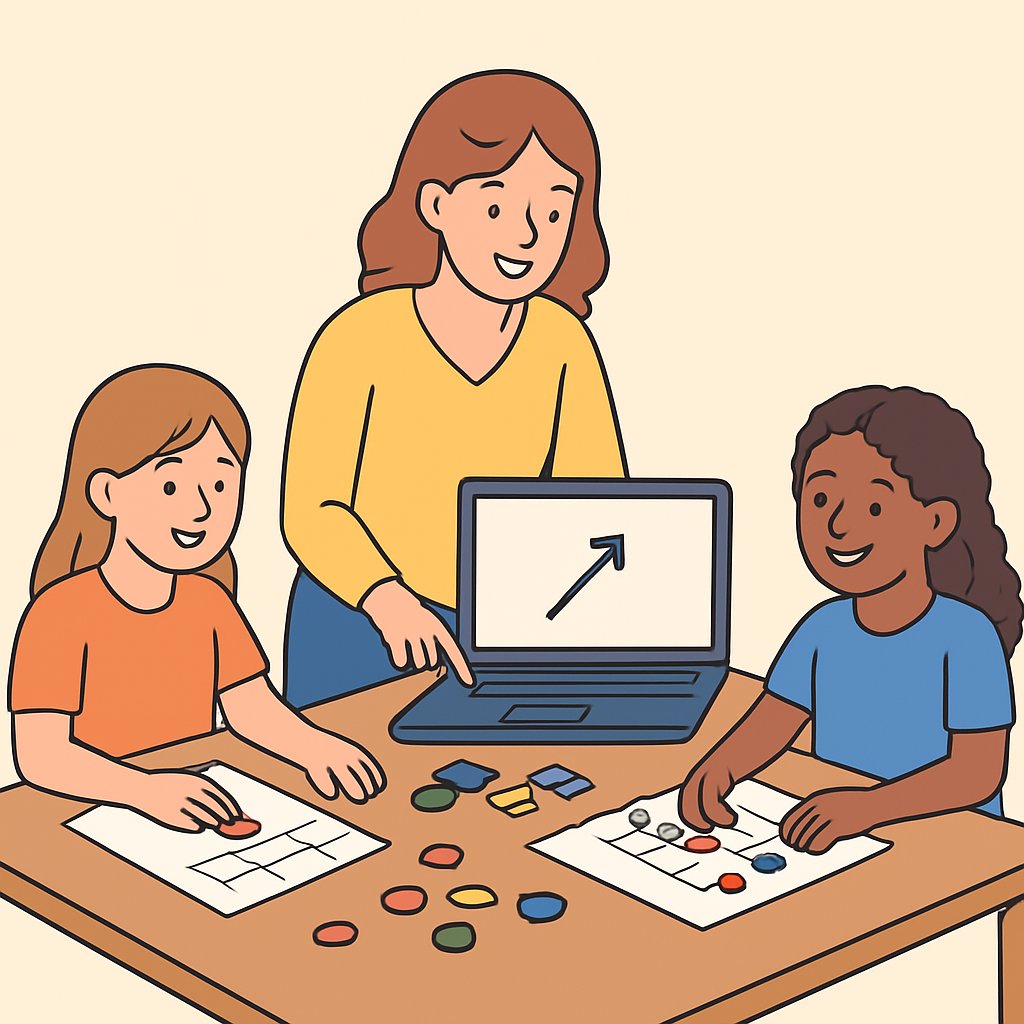
Immediate feedback keeps students engaged and preserves instructional momentum.
First, it surfaces misunderstandings before students consolidate incorrect methods.
Next, it informs teachers about precise next steps.
Additionally, it supports quick adjustments to instruction and practice.
Quick Formative Checks
Use very short checks to gather evidence of learning frequently.
For example, brief prompts or focused questions work well.
Moreover, keep checks low stakes to reduce anxiety and increase honesty.
Also, return feedback immediately when possible to close the loop quickly.
- Single targeted question about a recent skill.
- Short written response to demonstrate a calculation step.
- Quick oral check that samples several students.
Error Analysis Techniques
Analyze errors to detect patterns rather than isolated mistakes.
Then, group similar errors to guide targeted instruction.
Furthermore, involve students in diagnosing their own errors when appropriate.
- Identify common procedural mistakes across responses.
- Trace errors back to misunderstood concepts or steps.
- Note strategic or calculation slips separately from conceptual gaps.
Targeted Mini-Lessons
Deploy brief lessons that address precisely identified needs.
Each mini-lesson should focus on one clear learning objective.
Also, model a correct approach and show common pitfalls succinctly.
Then, follow with guided practice tied directly to the error pattern.
- State the goal plainly at the lesson start.
- Demonstrate the correct strategy in one or two steps.
- Provide quick practice with immediate corrective feedback.
Classroom Routines and Pacing
Integrate checks and mini-lessons into predictable lesson rhythms.
For instance, schedule short checkpoints after key tasks.
Then, use brief regrouping slots for targeted reteaching.
Moreover, keep mini-lessons succinct and focused to preserve flow.
- Run a quick check, then regroup students by need.
- Deliver a focused mini-lesson to the smallest necessary group.
- Resume practice quickly to apply learning immediately.
Teacher Moves and Student Roles
Teachers monitor responses and prioritize common misconceptions.
Then, they deliver fast, targeted instruction to address those misconceptions.
Students self-assess and attempt immediate corrections when possible.
Consequently, students receive clearer guidance and practice aligned with needs.
Planning Checklist
Create a short plan that lists checks, analysis steps, and mini-lesson targets.
Master Calculations Instantly
Unlock solutions for math, physics, engineering, and chemistry problem with step-by-step clarity. No internet required. Just knowledge at your fingertips, anytime, anywhere.
Next, prepare quick prompts and examples that reveal student thinking.
Also, decide in advance how to group students for targeted instruction.
Finally, schedule moments in lessons for rapid assessment and response.
You Might Also Like: How Mathematics Shapes Everyday Problem-Solving
Choice and Relevance
This section frames how choice influences student engagement.
It also shows how relevance makes practice purposeful.
Moreover, students tend to engage more deeply when they choose tasks.
Why Choice Strengthens Motivation
Giving learners choice increases their sense of ownership.
Additionally, relevance makes calculation practice feel purposeful.
Consequently, students often engage more deeply with tasks they choose.
Designing Varied Task Types
Start by varying task format to match diverse strengths.
Then offer brief focused problems that build fluency.
Next include open ended explorations that invite multiple strategies.
- Brief focused problems that build fluency.
- Open ended explorations that invite multiple strategies.
- Interest driven projects that connect calculations to hobbies.
- Performance tasks that ask students to create a product.
Offering Difficulty Options
Provide multiple entry points for each task.
Also allow students to select a level that challenges them.
Then include optional extensions for deeper practice.
Furthermore, let students move between levels as needed.
Student Selected Topics
Invite students to propose topics for calculation practice.
Additionally, offer a curated menu of topic choices.
Then allocate time for students to pursue chosen topics.
Moreover, encourage reflection on how topics relate to goals.
Practical Classroom Structures
Create clear choice menus or task grids for implementation.
Then set explicit success criteria for each choice.
Next schedule brief check ins to monitor progress and adjust.
- Model how to select a task and justify the choice.
- Teach quick self assessment strategies to guide level selection.
- Provide exemplars so students understand expected outcomes.
Assessing Without Reducing Ownership
Use flexible rubrics that accommodate different task types.
Also involve students in co creating assessment criteria.
Then provide feedback that emphasizes growth and choices.
Finally, let assessment inform future choice menus and supports.
Metacognitive Strategy Instruction
Metacognitive strategies make calculation purposeful for learners.
Routines help students plan and monitor their work.
Master Calculations Instantly
Unlock solutions for math, physics, engineering, and chemistry problem with step-by-step clarity. No internet required. Just knowledge at your fingertips, anytime, anywhere.
Teachers model routines that guide thinking during calculations.
Purpose and Overview
These strategies connect thinking with practical calculation steps.
They promote deliberate planning before computations begin.
Students use routines to monitor progress and adjust methods.
Establishing Problem-Solving Routines
Begin by modeling a clear stepwise routine for solving calculation tasks.
Next, describe planning, execution, checking, and adjustment as phases.
Teachers demonstrate each phase with sample problems during lessons.
- Plan the approach before computations.
- Choose a method that suits the problem.
- Estimate an expected result to guide accuracy.
- Compute carefully using the chosen method.
- Check the result against the estimate.
- Adjust the method if results seem inconsistent.
Teaching Self-Checks and Error Awareness
Teach students simple self-checks to catch common mistakes.
Encourage checking units, signs, and rough magnitude.
Have students verbalize steps to surface errors.
- Verify intermediate steps for arithmetic errors.
- Compare answers to initial estimates for plausibility.
- Re-run a calculation with a different method when possible.
- Explain reasoning aloud to reveal hidden errors.
Structured Reflection Practices
Introduce brief reflection prompts after practice sessions.
Use questions that target strategy and understanding.
Keep reflections short to maintain student focus.
- Reflect on the plan and the reason for choosing it.
- Identify one step that was efficient or inefficient.
- Note one error and the fix for future problems.
- State how confident you feel about the final result.
Implementing Routines in Daily Practice
Start each practice with a quick routine reminder.
Then, prompt students to use self-checks during work time.
End sessions with a brief reflection prompt for students.
Assessing Metacognitive Growth
Collect brief student reflections to monitor strategy use over time.
Look for increasing detail and specific self-check habits in reflections.
Use reflections to inform targeted mini-lessons on strategy weaknesses.
Additional Resources
Google search results for Teaching Calculation Skills Without Making Students Feel Bored Mathematics
Bing search results for Teaching Calculation Skills Without Making Students Feel Bored Mathematics


