


Gamify Calculations to Boost Motivation
Use points, levels, and badges to motivate calculation practice.
Keep rules simple and transparent for students.
Emphasize sustained practice and consistent effort with gamified elements.
Design a Clear Points and Levels System
Define how students earn points for calculation tasks.
Keep rules simple and easy to remember.
Tie level advancement to consistent effort and growing skill.
Vary challenges so each level emphasizes different calculation strategies.
Choose level rewards that reinforce sustained practice.
Create Meaningful Badges
Design badges that recognize specific calculation skills or productive habits.
Make badge criteria explicit and easy to check.
Offer badges for effort, accuracy, and problem-solving approaches.
Let students display badges visibly to acknowledge progress.
Classroom-Friendly Game Formats
Select formats that suit short practice windows and focus.
Rotate activities to keep sessions energizing and accessible.
Provide low-stakes options to reduce student anxiety about speed.
- Short practice rounds let students attempt focused calculation sets. Rounds keep sessions energizing and time-efficient.
- Team challenges encourage collaboration and peer coaching during calculations. Teams can combine points to pursue shared goals.
- Rotating stations present varied tasks and allow flexible pacing. Stations engage different strengths and learning preferences.
- Low-stakes timed sprints motivate recall without creating high anxiety. Provide practice sprints before scoring to build confidence.
Sustain Motivation and Effort
Balance competition with collaboration to maintain a positive classroom culture.
Give regular feedback tied to points, levels, and badges.
Celebrate incremental progress to encourage continued effort.
Avoid prioritizing speed over conceptual understanding and accuracy.
Implementation Tips for Teachers
Start small to test the system and gather student input.
Explain all rules and expectations before gameplay begins.
Track points transparently so students trust the system.
Refine challenges to match student readiness and growth.
Manage Equity and Accessibility
Ensure every student finds an accessible entry point into gamified tasks.
Offer multiple ways to earn badges for diverse learners.
Rotate roles so all students experience leadership and support tasks.
Align Gamification with Learning Goals
Always link points, levels, and badges to curriculum objectives and skills.
Use gamified outcomes to inform instruction and targeted support.
Monitor progress through earned points, levels, and badges.
Story and Real-Life Context for Calculations
Stories connect calculations to human motives and consequences.
Master Calculations Instantly
Unlock solutions for math, physics, engineering, and chemistry problem with step-by-step clarity. No internet required. Just knowledge at your fingertips, anytime, anywhere.
Students see purpose beyond isolated procedures.
Students invest emotionally and engage with tasks more deeply.
Why Stories and Scenarios Matter
Designing Scenario-Based Problems
Start with a clear, relatable situation that highlights a decision point.
Next define a specific calculation goal tied to that decision.
Introduce constraints and resources to shape meaningful problem solving.
Add emotional stakes or consequences to increase student investment.
Also include opportunities for students to choose methods and justify them.
Elements of Effective Scenarios
- Relatable setting that students recognize and care about.
- Clear numerical goal connected to an authentic decision.
- Realistic constraints that require selective procedure use.
- Consequences that carry emotional or practical weight.
- Reflection prompts that ask for strategy explanation.
Roles Stakes and Student Agency
Assign roles that encourage perspective-taking and responsibility.
Consequently students approach calculations with real-world reasoning.
Also vary stakes to match students’ comfort with challenge.
Guiding Procedural Practice Within Stories
Embed procedural steps inside narrative tasks to provide context for practice.
Then scaffold procedures with prompts that connect to narrative decisions.
Moreover balance practice with choice to maintain ownership and skill growth.
Assessment and Reflection
Use reflection prompts to surface reasoning and emotional responses.
Additionally ask students to explain how context influenced procedural choices.
Finally collect observations to inform future scenario design and instruction.
Hands-On Tools and Number Talks
Manipulatives make abstract computation tangible for learners.
Consequently, students connect procedures to visual and physical experiences.
Moreover, this approach invites richer classroom discussion about methods.
Choosing and using manipulatives
Begin by selecting tools that match the target computation concept.
- Use small objects for counting and place value exploration.
- Offer tiles or blocks for composing and decomposing numbers.
- Include visual strips or rods for measurement and fraction ideas.
- Provide reusable representations that students can manipulate repeatedly.
Designing clear visual models
Map equations to drawings that highlight relationships between quantities.
For instance, show partitioning to illuminate addition and subtraction strategies.
Additionally, align models with manipulatives for seamless transitions.
Facilitating number talks
Pose a brief computation and invite multiple solution methods from students.
Then, encourage students to explain their reasoning in concise steps.
Moreover, record different strategies visibly for comparison and reflection.
- Ask probing questions that uncover student thinking and choices.
- Allow peers to ask clarifying questions before summarizing methods.
- Highlight efficient or creative strategies without elevating a single correct path.
Classroom routines for rich discussion
Establish norms that value reasoning over speed or single answers.
Next, create predictable talk formats to support participation and equity.
Furthermore, rotate roles such as presenter, questioner, and recorder during talks.
Assessing understanding through representation
Use student explanations and models to gauge conceptual depth and misconceptions.
Master Calculations Instantly
Unlock solutions for math, physics, engineering, and chemistry problem with step-by-step clarity. No internet required. Just knowledge at your fingertips, anytime, anywhere.
Moreover, prioritize observing strategy variety rather than only checking final answers.
Finally, adjust subsequent lessons based on patterns in student reasoning and representation.
Gain More Insights: How to Turn Routine Math Problems Into Meaningful Challenges
Leverage Interactive Technology for Immediate Feedback
Interactive tools help students explore calculations actively.
They deliver immediate responses that guide student thinking.
They allow trial and error without heavy penalty.
Why Interactive Technology Helps
Interactive experiences increase engagement with calculation tasks.
Immediate feedback supports strategic decision making during practice.
Students can experiment freely and refine their approaches.
Types of Interactive Tools
Provide simulations that let students change variables.
Use apps that enable stepwise exploration of problems.
Offer dynamic worksheets and graphical visualizers for relationships.
- Interactive simulations for experimenting with variables
- Apps that offer stepwise problem exploration
- Dynamic worksheets that update with student input
- Graphical visualizers for numerical relationships
Designing Exploratory Practice
Offer tasks that invite prediction and testing of results.
Also scaffold prompts to focus on key calculation steps.
Next include checkpoints that encourage reflection on methods used.
Immediate Feedback Strategies
Provide instant correctness signals after student input.
Also supply tiered hints when students struggle with a step.
Show worked examples after repeated errors to model approaches.
Assessment and Progress Tracking
Collect response data to inform formative assessments.
Then analyze patterns to identify persistent misconceptions.
Use insights to adapt upcoming practice and instruction.
Classroom Logistics and Accessibility
Plan device rotation to maximize hands on time for each student.
Also prepare offline alternatives for students without reliable devices.
Ensure interfaces remain uncluttered to reduce cognitive load.
Practical Tips for Classroom Use
Start with short guided explorations before open ended experimentation.
Then encourage students to verbalize their strategy after trials.
Rotate roles so students debug and test peer work.
Find Out More: Making Mathematics More Relatable Through Everyday Examples
Design Collaborative Problem-Solving Tasks
Collaborative tasks let students practice calculations together.
Use varied prompts that require calculation and explanation.
Master Calculations Instantly
Unlock solutions for math, physics, engineering, and chemistry problem with step-by-step clarity. No internet required. Just knowledge at your fingertips, anytime, anywhere.
Arrange small stations with focused calculation challenges.
Purpose and Structure
They develop communication and joint problem solving.
Therefore set clear goals for each task.
Define concise peer roles to structure interactions.
Task Types and Prompts
- Calculation relay asks teams to solve sequential steps collaboratively.
- Error hunt asks groups to identify and correct mistakes.
- Strategy swap asks students to compare different solving approaches.
- Explain-and-justify tasks require spoken or written reasoning after calculating.
Setting Up Maths Stations
Each station should state the learning objective plainly.
Also include a task card that explains steps and expectations.
Moreover provide answer prompts for quick checks at stations.
- Rotate students every short interval to ensure varied practice.
- Similarly assign roles at each station to guide collaboration.
Peer-Teaching Roles and Expectations
- The explainer summarizes steps and models reasoning aloud.
- The questioner probes understanding with targeted follow-up questions.
- The checker verifies calculations and flags discrepancies for discussion.
- The recorder notes strategies and results for group reflection.
- The reporter shares the group solution with the whole class.
Furthermore rotate roles regularly to build diverse skills.
Scaffolding and Support
Begin with a brief demonstration of collaborative routines.
Next provide sentence stems to help explanations and questions.
Also offer checklists that outline success criteria for calculations.
Additionally plan quick teacher check-ins to monitor group progress.
Assessment and Reflection
Use brief peer feedback forms to capture strengths and next steps.
Then ask groups to present a concise explanation of their method.
Finally collect one-sentence student reflections on what improved understanding.
Consequently use these reflections to inform subsequent task design.
Explore Further: How Mathematics Shapes Everyday Problem-Solving
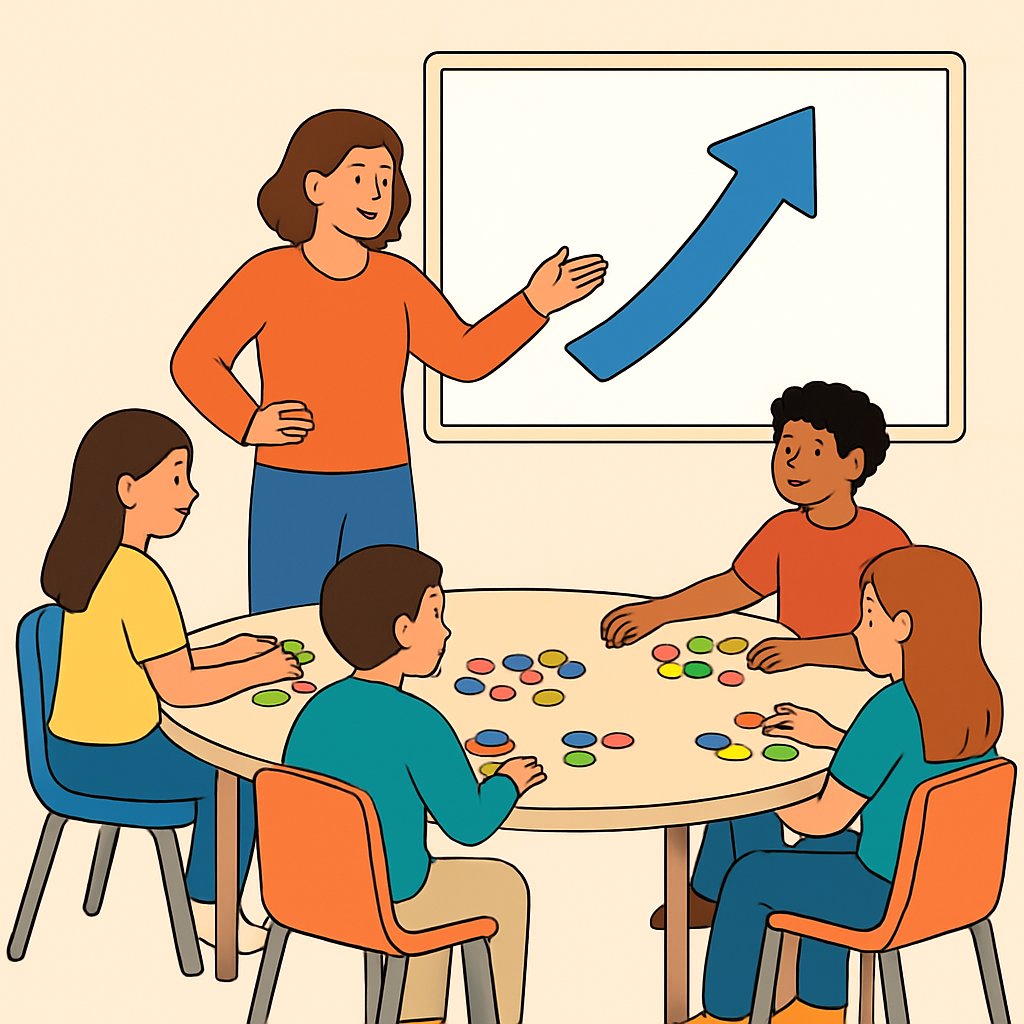
Project-Based and Cross-Curricular Tasks that Center Sustained Calculation
Prioritize tasks that require repeated, connected calculations over time.
Choose outcomes that demand sustained calculation and clear deliverables.
Begin with a clear scope and measurable calculation goals.
Design Principles for Projects
Additionally, align tasks with other subject areas for authentic context.
Also, embed checkpoints where students verify intermediate calculation results.
Moreover, require documentation that records methods and adjustments.
Authentic Outcomes to Target
Students estimate costs and track spending across the project.
Furthermore, they reconcile planned budgets with actual expenditures.
Students collect and convert measurements for consistent aggregates.
Then they use those aggregates to inform practical decisions or designs.
Students compile data, calculate key metrics, and identify patterns.
Consequently, they derive recommendations rooted in numerical evidence.
Planning Student Workflows
Next, define iterative milestones that focus on calculation deliverables.
Master Calculations Instantly
Unlock solutions for math, physics, engineering, and chemistry problem with step-by-step clarity. No internet required. Just knowledge at your fingertips, anytime, anywhere.
Then, schedule regular review sessions for calculation accuracy and methods.
Assign roles to distribute calculation responsibilities among students.
Moreover, rotate roles to broaden calculation practice and accountability.
Require students to submit calculation logs at each checkpoint.
Also, demand annotated steps that reveal reasoning and error checks.
Scaffolds and Supports
Provide structured templates that standardize calculation recording and reporting.
Also, offer worked examples that model multi-step calculation processes.
Furthermore, build incremental tasks that increase calculation complexity over time.
Cross-Curricular Collaboration
Coordinate with colleagues to set shared project aims and assessment criteria.
Moreover, map calculation tasks to objectives in other disciplines.
Also, plan joint presentations that highlight numerical reasoning across subjects.
Learn More: Understanding the Power of Calculus in Advanced Science
Differentiate Calculation Challenges
Differentiate calculation challenges to match student readiness.
Design tasks that increase reasoning demand more than calculation steps.
Offer varied representations so students use diverse strategies.
Tiered Tasks
Tiered tasks match task complexity to learner readiness.
Provide multiple entry points to the same mathematical idea.
Increase reasoning demand rather than only increasing calculation steps.
- Keep the core objective common across tiers.
- Adjust numerical complexity or required steps to scale support.
- Provide brief prompts that scaffold thinking without giving answers.
- Include optional extension tasks to deepen reasoning for ready learners.
Choice Boards
Choice boards give students ownership over practice methods.
Provide options that target the same skill in different formats.
Allow students to choose tasks that match their confidence and interests.
- Short calculation sets for fluency.
- Tasks that require written explanation of strategy.
- Problems that invite multiple solution paths.
- Creative challenges where students design a question.
Adaptive Prompts
Adaptive prompts guide instruction based on student responses.
Provide graduated hints that decrease in specificity over time.
Ask reflective questions that prompt students to explain strategies.
- Clarifying prompts ask students to restate the problem in their own words.
- Strategy prompts nudge toward alternative methods without modeling them.
- Error prompts highlight a specific step for students to reassess.
- Extension prompts invite students to generalize or extend solutions.
Implementation Tips
Begin with brief readiness checks to inform task placement.
Rotate students through options to balance choice and structure.
Keep quick records of progress to guide instructional adjustments.
Prepare simple success criteria for each option to clarify expectations.
Assessment and Feedback
Use frequent formative checks to monitor understanding and readiness.
Align feedback to students’ strategy use and next steps.
Master Calculations Instantly
Unlock solutions for math, physics, engineering, and chemistry problem with step-by-step clarity. No internet required. Just knowledge at your fingertips, anytime, anywhere.
Adjust future tiers and prompts based on assessment evidence.
Document growth to inform future differentiation decisions.
Introduce Puzzles and Playful Challenges
Puzzles, timed challenges, races, and creative constraints add novelty to computation practice.
Furthermore, these approaches inject urgency and playful competition into routine exercises.
Puzzles invite students to explore patterns and strategies without fear of failure.
Puzzles to Spark Curiosity
Additionally, puzzles can vary in structure to target different calculation skills.
- Use open-ended puzzles that require multiple steps and flexible thinking.
- Offer short challenge cards that students can solve independently or in pairs.
- Rotate puzzle types to maintain novelty over multiple lessons.
Timed Challenges to Build Urgency
Timed challenges encourage quick recall while preserving careful thinking.
Moreover, brief sprints keep energy high without overwhelming students.
- Set short time windows that match student readiness and task complexity.
- Provide clear criteria and a visible countdown to focus attention.
- Allow flexible pacing options for students who need more processing time.
Math Races for Playful Competition
Math races create momentum through collaborative or head-to-head formats.
Meanwhile, they can emphasize accuracy alongside speed to balance goals.
- Structure races so all students contribute and celebrate effort.
- Rotate roles to let students solve, verify, and explain solutions.
- Adjust race length to fit classroom routines and attention spans.
Creative Constraints to Foster Flexibility
Creative constraints push students to use familiar skills in new ways.
Consequently, constraints promote inventive strategies and deeper number sense.
- Introduce constraints that highlight alternative solution paths.
- Vary constraints regularly to challenge habitual approaches.
- Encourage students to explain how constraints changed their thinking.
Practical Tips for Smooth Implementation
Start with clear rules and model one example before students begin.
Next, scaffold difficulty so students experience early success and growth.
Also, monitor pacing and adjust time limits to maintain engagement.
Furthermore, debrief briefly after each activity to consolidate learning.
Finally, collect student reflections to inform future challenge design.
Additional Resources
Google search results for Making Math Calculations Feel More Exciting in the Classroom Mathematics
Bing search results for Making Math Calculations Feel More Exciting in the Classroom Mathematics


