


Interpreting Nutrition Labels
This lesson focuses on reading nutrition labels.
Students will learn to identify serving size information.
They will use label data to make food choices.
Learning Objectives
Learners identify serving size information on a nutrition label.
The class calculates calories for a chosen portion size.
Students compute total grams of macronutrients for a serving.
They use label information to inform simple food choices.
- Students will identify serving size information on a nutrition label.
- Students will calculate calories for a chosen portion size.
- Students will calculate total grams of macronutrients for a serving.
- Students will use label information to inform simple food choices.
Materials and Preparation
Prepare sample nutrition labels or photocopies for student use.
Provide simple worksheets for recording calculations and observations.
Arrange basic measuring tools and food models if available.
Also ready calculators for students who prefer digital tools.
- Prepare sample nutrition labels or photocopies for student use.
- Provide simple worksheets for recording calculations and observations.
- Arrange basic measuring tools and food models if available.
- Additionally ready calculators for students who prefer digital tools.
Lesson Sequence
Follow a clear lesson sequence with activities and practice.
Begin with label awareness then move to guided calculations.
Finish with application activities and student reflections.
Introductory Activity
Begin with a short question that prompts label awareness.
Display a label and ask students to locate serving size information.
Encourage students to share quick observations about label layout.
Guided Calculation of Calories
First have students note calories per listed serving on the label.
Ask students to decide on a realistic portion size for practice.
Guide students to multiply per serving values by chosen servings.
Prompt students to record the total calories for their portion.
Guided Calculation of Macronutrients
Begin by having students find grams listed for each macronutrient.
Then instruct students to scale those gram values by chosen portion size.
Next ask students to total grams of each macronutrient for the portion.
Consequently students will compare macronutrient totals across different foods.
Portion Size Activities
Provide hands-on items for students to match common portion visuals.
Then have students adjust servings to meet a hypothetical meal plan.
Additionally ask students to reflect on how packaging sizes influence portions.
Applying Calculations to Food Choices
Ask students to compare two labels using their calculated portion totals.
Then prompt a discussion about trade-offs based on those calculations.
Master Calculations Instantly
Unlock solutions for math, physics, engineering, and chemistry problem with step-by-step clarity. No internet required. Just knowledge at your fingertips, anytime, anywhere.
Finally have students state a food choice and justify it using label data.
Assessment and Reflection
Use a brief exit ticket that asks for one calculated total and one insight.
Collect worksheets to check accuracy and reasoning patterns.
Invite students to write one short goal based on label learning.
Differentiation and Extensions
Offer simplified labels for students needing scaffolded support.
Provide challenge tasks that combine multiple food items into a meal.
Encourage group projects that involve planning a balanced snack.
Sample Student Tasks
Students calculate calories for a half serving and record the result.
Learners scale macronutrient grams from one serving to three servings.
Students compare two products and choose one based on totals.
- Calculate calories for a half serving and record the result.
- Scale macronutrient grams from one serving to three servings.
- Compare two products and choose one based on calculated totals.
- Create a brief explanation for a food choice using label numbers.
Teacher Notes for Implementation
Plan time for modeling calculations with clear stepwise examples.
Circulate during practice to address calculation errors quickly.
Collect feedback to refine future lessons and supports.
Simple Data Collection and Classroom Statistics
This section shows how students collect health-related numbers.
It explains basic analysis steps teachers can use.
Students track metrics like physical activity, sleep, and hydration.
Designing a Basic Data Collection Plan
Decide which student behaviors you will track.
Then choose a reasonable time frame for tracking.
Also determine how often students will record data.
- Physical activity amounts.
- Sleep duration each night.
- Hydration or fluid intake.
Simple Tools and Materials
Use plain paper logs or classroom charts.
Alternatively use simple digital spreadsheets if available.
Also prepare clear instructions for students to follow.
Daily Logging Templates
Include a date field for each entry.
Include a field for activity duration.
Include a field for sleep hours each night.
Include a field for fluid intake.
Introductory Statistics Concepts
Teach the mean as the average value.
Next introduce median to show central tendency.
Also explain range to show variability.
Furthermore discuss simple counts and frequencies.
Master Calculations Instantly
Unlock solutions for math, physics, engineering, and chemistry problem with step-by-step clarity. No internet required. Just knowledge at your fingertips, anytime, anywhere.
Analyzing Classroom Data
Aggregate class entries to create a dataset.
Then compute averages for each measured behavior.
Also identify patterns across days or students.
- Compare individual values to the class average.
- Spot increases or decreases over time.
- Highlight consistent habits worth discussing.
Visualizing Results
Plot simple bar charts to compare categories.
Alternatively use line charts to show trends.
Also create color-coded tables for quick review.
Classroom Activities to Interpret Data
Ask students to write short reflections on trends.
Then facilitate small group discussions about habits.
Furthermore have students set personal, measurable goals.
Privacy and Ethical Considerations
Protect student privacy when collecting personal data.
Moreover anonymize entries before class analysis when possible.
Additionally explain data use to students and guardians.
Linking Data Insights to Healthy Choices
Use observed patterns to prompt classroom conversations.
Next encourage students to choose one small habit to change.
Finally review progress periodically to reinforce learning and motivation.
Budgeting for Nutritious Menus
Start by setting a clear budget for a meal or a day of meals.
Unit price shows the cost for one unit of measure.
Cost per serving links ingredient cost to the number of servings produced.
Understanding Unit Price
First, identify the total price and the package quantity.
Next, divide the total price by the package quantity to find unit price.
Then, compare unit prices across similar items to find better value.
Calculating Cost Per Serving
Begin by totaling the cost of all ingredients used in a recipe.
Next, divide that total by the recipe yield to calculate cost per serving.
Moreover, include small additional costs like spices or oils when relevant.
Using Simple Arithmetic to Compare Meal Options
Use addition to total ingredient costs for each meal option.
Then, use division to find cost per serving for each option.
Afterward, use multiplication to scale recipe costs for different serving sizes.
Planning Affordable Menus
Next, list staple ingredients that provide nutrition and consistent value.
Then, combine staples with fresh or preserved produce for balanced menus.
Additionally, batch cooking can spread ingredient costs across multiple meals.
Master Calculations Instantly
Unlock solutions for math, physics, engineering, and chemistry problem with step-by-step clarity. No internet required. Just knowledge at your fingertips, anytime, anywhere.
Classroom Activities to Practice Arithmetic
- Have students calculate unit prices from generic package information.
- Ask students to compute cost per serving for short recipes.
- Challenge groups to design a day’s menu within a set budget.
- Encourage students to present their arithmetic steps and reasoning aloud.
Shopping Strategies and Ingredient Substitutions
Compare unit prices to decide between package sizes and brands.
Additionally, consider ingredient substitutions that maintain nutrition while lowering cost.
For example, pair cheaper staples with seasonal produce to balance cost and variety.
Teaching Reflection and Skill Transfer
Prompt students to reflect on how arithmetic informed their food choices.
Then, discuss how these budgeting skills apply to everyday decision making.
Finally, encourage ongoing practice to build confidence with cost calculations.
Delve into the Subject: Using Personalized Data to Drive Fitness Success
Visual Data Literacy
This section helps students create visuals comparing sugar, salt, and fat.
It teaches students how to read comparative nutrient visuals.
The section builds on earlier numeracy lessons.
Learning Goals
Students will identify visual forms that suit comparative nutrient data.
They will plan clear visuals that highlight sugar salt and fat differences.
Students will critique visual accuracy and clarity using evidence based reasoning.
Key Concepts
Scale and proportion ensure fair visual comparisons between nutrients.
Clear labeling prevents misinterpretation of chart elements.
Consistent units or bases allow accurate comparison across items.
Visual hierarchy guides viewers to the most important information quickly.
Designing Comparisons
Choose a visual form that matches comparison goals and audience needs.
Limit the number of items to keep visuals readable and focused.
Group similar items together to reveal meaningful patterns and differences.
Apply a consistent color scheme to represent each nutrient distinctly.
Creating Visuals
Collect accurate nutrient values using a consistent measurement basis.
Sketch a layout that places labels, legend, and title clearly.
Choose a digital or hand drawn method that fits resources and skills.
Refine visuals by simplifying clutter and emphasizing key comparisons.
Interpreting Visuals
Inspect axes and scales to understand the comparison framework.
Compare relative sizes, colors, and positions to identify nutrient differences.
Question whether the visual exaggerates or understates differences intentionally.
Relate observed differences to general healthy living choices cautiously.
Classroom Activities
Classroom activities help learners explore visual choices in practice.
Master Calculations Instantly
Unlock solutions for math, physics, engineering, and chemistry problem with step-by-step clarity. No internet required. Just knowledge at your fingertips, anytime, anywhere.
Group work encourages students to negotiate layout and labeling decisions.
Peer critique sessions build skills in explaining and defending visual choices.
- Students sketch comparative charts by hand to explore visual decisions.
- Students create infographics collaboratively to practice layout and labeling.
- Students perform a gallery walk to critique clarity and persuasive elements.
- Students present interpretations and defend visual choices to build critical thinking.
Accessibility and Clarity
Ensure sufficient color contrast and readable font sizes for all viewers.
Add clear titles, descriptive labels, and alternative text for accessibility.
Use simple language in legends and captions to support comprehension.
You Might Also Like: Why Accurate Measurements Are Key to Sustainable Weight Loss
Measurement and Scaling Activities
These activities help students connect measurement to healthy choices.
They also focus on converting units and estimating portions.
Students learn to adjust recipes to fit serving needs.
Overview
The module links measurement skills to healthier food choices.
Activities emphasize real world kitchen contexts and decisions.
Learners practice skills that support mindful portion control.
Unit Conversion Stations
Set up stations targeting conversions between familiar kitchen units.
Students rotate and complete brief conversion tasks at each station.
Next they record conversions and explain calculation steps succinctly.
Then peers compare results and discuss common conversion strategies.
Portion Estimation Challenge
Prepare food visuals or tangible items for estimation tasks.
Students estimate portions using hands, plates, or containers.
Then they check estimates against standard portion descriptions.
Finally they reflect on how estimation informs portion control decisions.
Recipe Scaling Workshop
Introduce a basic recipe and ask students to change servings.
Students compute multiplication or division to alter ingredient amounts.
Next they produce a scaled ingredient list and show calculations.
Then they discuss portion sizes and waste management implications.
Materials and Supports
- Provide measuring tools and visual aids for accurate practice.
- Supply calculators or conversion charts for learners who need them.
- Offer varied task difficulty to meet diverse student needs.
Differentiation and Extension Ideas
Adapt tasks by simplifying numbers or providing stepwise prompts.
Challenge advanced students with larger scaling factors and complex problems.
Encourage application of scaling skills to planning balanced meals.
Explore Further: How Macro Calculations Enhance Nutritional Balance
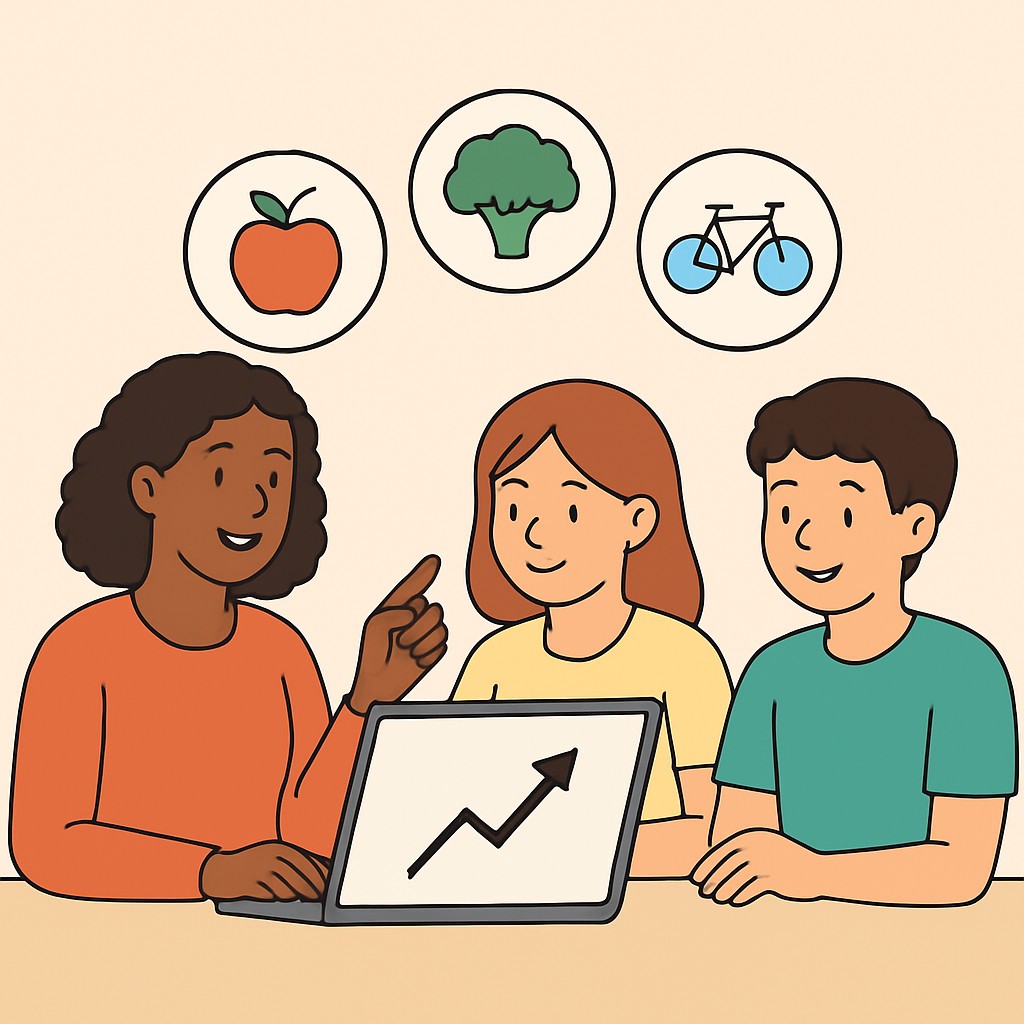
Designing Numeric Health Goals
This section builds on students’ activity tracking.
It guides teachers to set numeric targets for healthy behaviors.
Master Calculations Instantly
Unlock solutions for math, physics, engineering, and chemistry problem with step-by-step clarity. No internet required. Just knowledge at your fingertips, anytime, anywhere.
The guidance covers step targets water intake and active minutes.
Principles of Effective Goals
Set goals that students can measure and understand easily.
Next, ensure goals relate clearly to daily behaviors.
Also, keep goals flexible to allow gradual progress and learning.
Additionally, involve students in choosing and refining their targets.
- Make each goal specific and observable.
- Prefer measurable outcomes over vague intentions.
- Keep goals realistic for students’ current routines.
- Include a clear timeframe for achieving each goal.
- Align goals with students’ personal motivations and preferences.
Designing Step Targets
Start by reviewing baseline step data with students.
Then, set a clear step target for a chosen period.
Moreover, encourage small manageable increases over time.
Finally, discuss strategies to incorporate walking into routines.
Designing Water Intake Targets
Begin by asking students about current hydration habits.
Next, define a measurable intake goal for a day or session.
Also, suggest practical cues to remind students to drink regularly.
Then, plan ways to track intake that fit classroom routines.
Designing Active Minute Targets
Identify types of activity that count toward active minutes.
Next, estimate typical session durations with student input.
Then, set a target for total active minutes in a timeframe.
Finally, promote variety to keep students engaged and motivated.
Monitoring Progress
Use simple tracking methods that students can maintain daily.
For example, offer checklists brief logs or class charts.
Additionally, schedule regular reflection moments to discuss progress and barriers.
Also, encourage peer feedback and supportive accountability systems.
Moreover, use short frequent reviews instead of infrequent long evaluations.
Adjusting Goals and Reflection
Review progress with students at set intervals.
Then, revise targets based on evidence and student experience.
Also, teach students to identify realistic adjustments after obstacles.
Finally, emphasize learning and persistence over perfect adherence.
Classroom Activities to Support Behavior Change
Plan classroom activities that support measurable habit changes.
Then, schedule short tracking challenges to reinforce consistent routines.
Also, create peer coaching pairs to sustain motivation and accountability.
- Host a goal-setting workshop where students write and share targets.
- Run short tracking challenges that focus on consistent habits.
- Use reflection prompts to prompt student insights and planning.
- Create peer coaching pairs to sustain motivation and accountability.
- Celebrate milestones with low-cost student-centered recognition activities.
You Might Also Like: How Calculating Calorie Needs Helps Achieve Fitness Goals
Master Calculations Instantly
Unlock solutions for math, physics, engineering, and chemistry problem with step-by-step clarity. No internet required. Just knowledge at your fingertips, anytime, anywhere.
Integrating Digital Tools for Personal Health Data
This guide supports classroom use of digital tools for personal health data.
It outlines tool selection, spreadsheet design, and data interpretation.
It highlights privacy, assessment, and classroom workflow best practices.
Getting Started with Simple Digital Tools
Start with clear learning goals that connect numbers to healthy choices.
Next, introduce a small set of tools to avoid overwhelm.
Additionally, model how to record observations in digital formats.
Finally, emphasize that tools support inquiry and reflection.
Choosing a Basic Toolset
- Select a spreadsheet for organizing and modeling data.
- Include a basic calculator for quick arithmetic checks.
- Offer a simple app for logging personal health entries.
Designing Spreadsheets for Classroom Use
Create column headers that clearly name each data field.
Use consistent units and document those units in the sheet.
Additionally, add sample rows to demonstrate correct data entry.
Then, protect cells that contain formulas to prevent accidental edits.
Moreover, provide dropdown lists to standardize categorical responses.
Template Features to Include
- Include a timestamp or date column for each entry.
- Add notes fields for context and unusual observations.
- Provide a brief instructions cell at the top of the sheet.
Using Formulas and Simple Models
Teach students to calculate totals and averages from their entries.
Then, show how to compute simple changes between two measurements.
Additionally, demonstrate how basic percentage comparisons reveal differences.
Next, use conditional indicators to flag values that meet set thresholds.
Collecting Data with Calculators and Apps
Train students to enter data accurately and consistently each session.
Also, use calculators to double check manual totals and derived values.
Encourage exporting entries into spreadsheets when apps support sharing.
Furthermore, schedule regular checkpoints to validate and clean the data.
Interpreting Data and Promoting Insights
Guide students to describe patterns they observe in their datasets.
Then, ask students to pose questions that the numbers might answer.
Additionally, prompt comparisons across time or different conditions.
Finally, encourage students to suggest small behavior changes based on findings.
Privacy, Safety and Classroom Norms
Establish clear rules for consent before collecting personal data.
Then, teach anonymization techniques to protect student identities.
Also, limit access to shared files to maintain privacy.
Furthermore, discuss appropriate and inappropriate uses of personal information.
Assessment, Feedback and Classroom Workflow
Create simple rubrics that assess data accuracy and interpretation skills.
Offer timely feedback that focuses on numeric reasoning and habits.
Master Calculations Instantly
Unlock solutions for math, physics, engineering, and chemistry problem with step-by-step clarity. No internet required. Just knowledge at your fingertips, anytime, anywhere.
Also, include peer review sessions to build collaborative data literacy.
Finally, iterate on templates based on classroom experiences and reflections.
Assessment and Reflection Strategies
Use assessments to evaluate how students apply numeric reasoning to healthy choices.
Therefore align assessments with learning targets and classroom expectations.
Additionally ensure assessments measure reasoning, not only final answers.
Purpose and Alignment
Clarify how assessments connect to the lesson targets.
Make sure tasks reflect classroom expectations for reasoning.
Also confirm items assess thought processes and not just answers.
Designing Rubrics for Numeric Reasoning
Create a rubric that lists observable reasoning behaviors.
Write clear descriptors for each performance level and expectation.
Include student work examples to illustrate each descriptor in practice.
- Interpretation of numeric information.
- Accuracy and justification of calculations.
- Strategy selection and use of estimation.
- Application of numeric reasoning to a choice.
- Communication of reasoning and assumptions.
Creating Quizzes to Probe Reasoning
Design quiz items that focus on thinking steps as well as outcomes.
For example include prompts requiring explanations of how problems were solved.
Also vary item formats to capture different aspects of numeric reasoning.
- Short answer items that show calculation steps.
- Justification prompts asking why a choice makes sense numerically.
- Error analysis questions that ask students to identify mistakes.
- Estimation tasks revealing reasoning about reasonableness.
Reflective Prompts to Reveal Thinking
Use prompts that ask students to explain their decision process in plain language.
In addition ask students to describe assumptions that influenced their reasoning.
Encourage brief reflective journals to track developing reasoning skills.
- Describe how numbers affected your choice in this task.
- Explain one strategy you used and why you chose it.
- Identify an assumption you made and how it changed your result.
- Suggest one way to improve your numeric reasoning next time.
Feedback Practices That Promote Growth
Provide timely feedback that focuses on reasoning steps and strategy use.
Highlight strengths and offer one specific suggestion for improvement.
Use comments that guide revisions instead of only giving scores.
Peer and Self Assessment Roles
Teach students to use rubrics to peer assess reasoning responses.
Use structured checklists to make peer feedback productive and respectful.
Require students to write a short response to peer feedback before revising.
Implementation Tips for Classrooms
Start with simple tasks and increase complexity over time.
Model verbalizing numeric thinking during class discussions for students.
Schedule brief reflection moments after assessments to reinforce learning.
Monitoring Progress Over Time
Collect rubric scores and reflections to observe reasoning patterns.
Review collected evidence periodically and adjust instruction and supports.
Use assessment cycles that inform ongoing teaching decisions.
Additional Resources
Master Calculations Instantly
Unlock solutions for math, physics, engineering, and chemistry problem with step-by-step clarity. No internet required. Just knowledge at your fingertips, anytime, anywhere.
Bing search results for Helping Students Connect Numbers to Healthy Living Choices Health & Fitness


